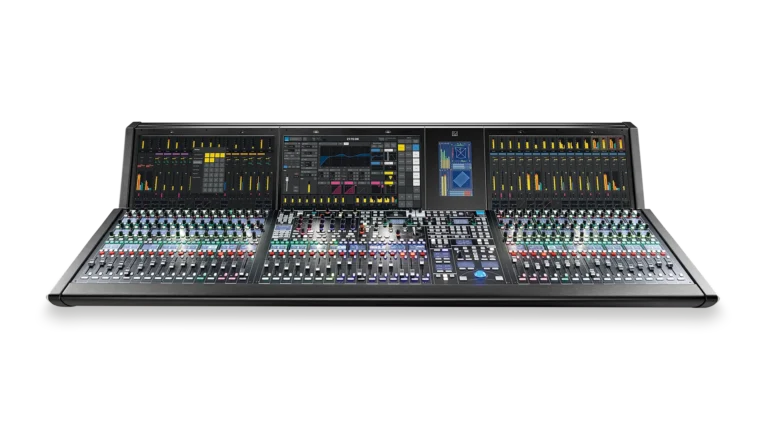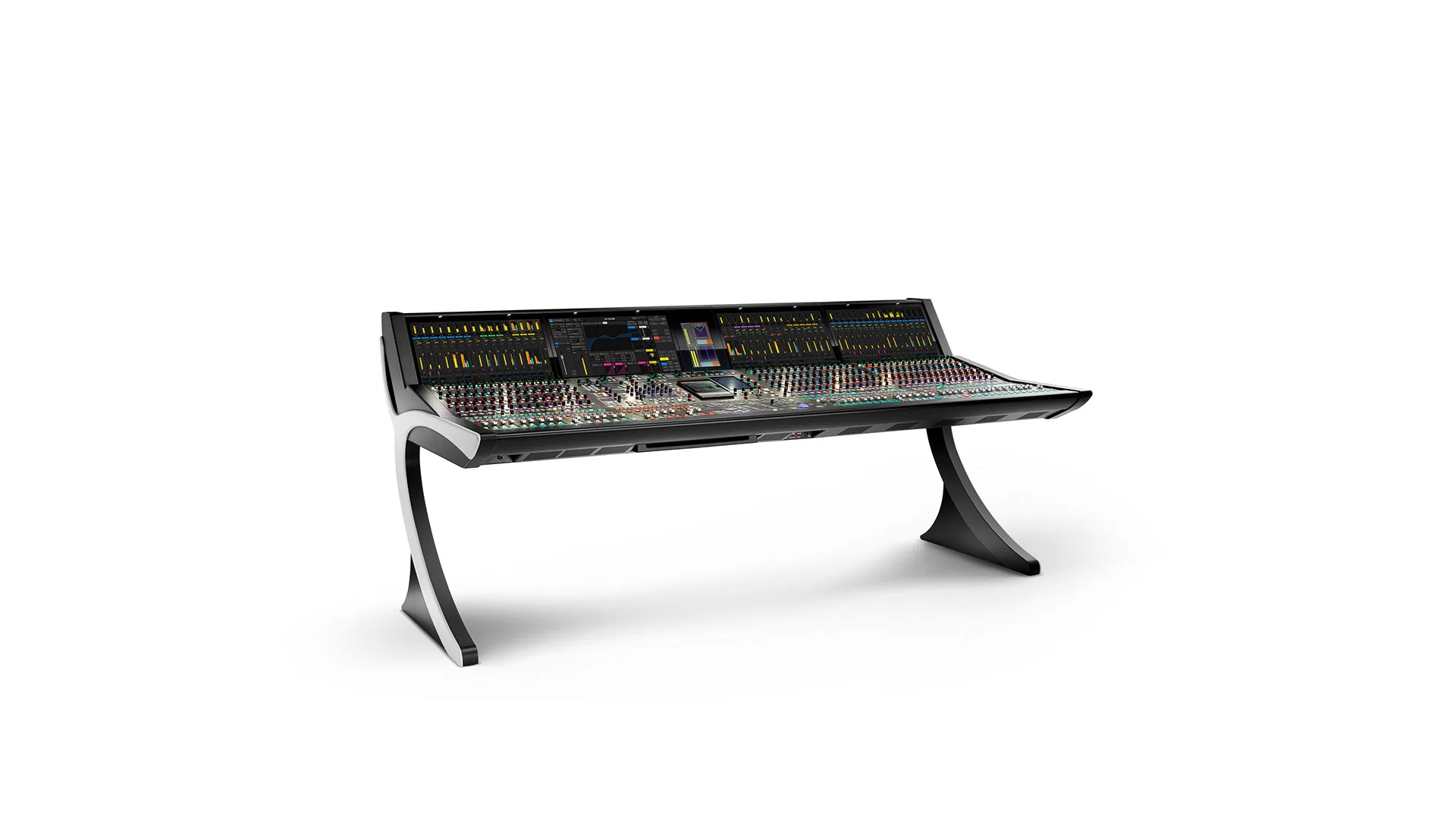
mc²96
Grand Production Console
Pure. Precise. Peerless.
With experience gathered over more than 50 years, German audio innovator Lawo is distinguished by its engineering and manufacturing of the most reliable and most advanced audio mixing consoles available. Originally developed for mobile and studio broadcast environments with zero tolerance for failure, Lawo consoles are also widely chosen for their audio quality in theater, studio and live performance applications.
With the mc²96, the mc² platform is pushed beyond limitations, culminating in a pure, unparalleled audio production tool dedicated to those who can tell the difference. Whether it’s intended to be used in broadcast, theater or recording — in each of these applications it stands out with a unique feature set. The mc²96 provides optimized performance within IP video production environments with native ST2110 support.
For optimized performance within IP video production environments, there is full support for native ST2110, AES67, RAVENNA, and Dante.
Best-in-class performance in networking applications has been taken to the next level with the addition of unique capabilities such as HOME–based simplified network setup. All of this and more, simply reinforces this console’s place as the number one choice within complex IP-based production infrastructures.
Push the envelope and take your audio production capabilities even further than you imagined with the new mc²96.
A Global Standard Re-Defined.
Lawo mc²96 brochure
With the mc²96, the mc² platform culminates in a pure, unparalleled audio production tool dedicated to those who can tell the difference. In each application, it stands out with a unique set of features. The mc²96 also provides optimized performance within IP video production environments.
Overview
Surface
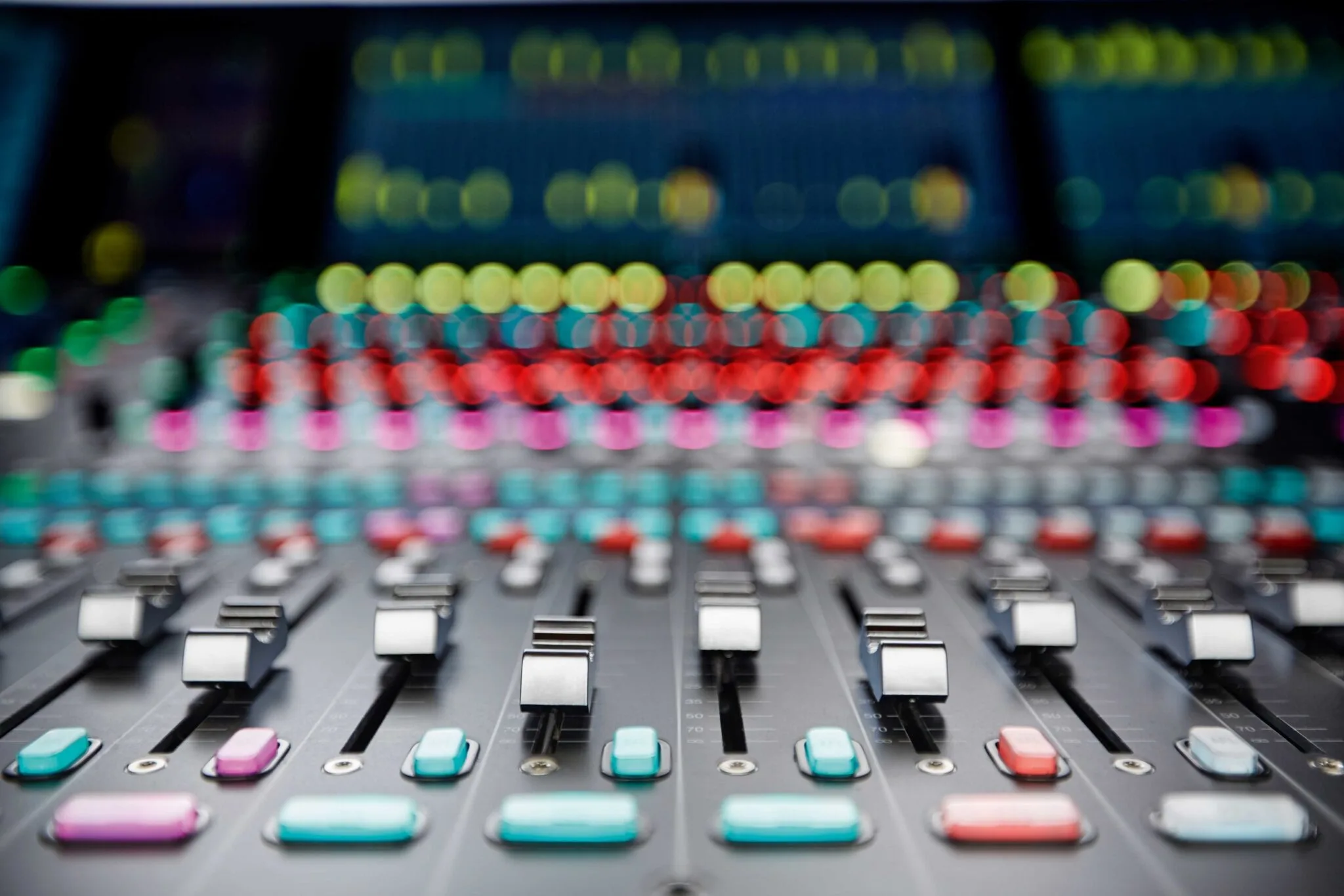
High Quality Faders
The mc²56 features the same dust-proof, long-life performance faders as its MKII predecessor, providing smooth and precise fades for a lifetime.
The Power of Compact
Perfect for outside broadcast vehicle dimensions: 64 faders fit across most standard installations. A 16 fader stand-alone extender may be added at any time for subsequent expansion.
Enhanced Color Coding
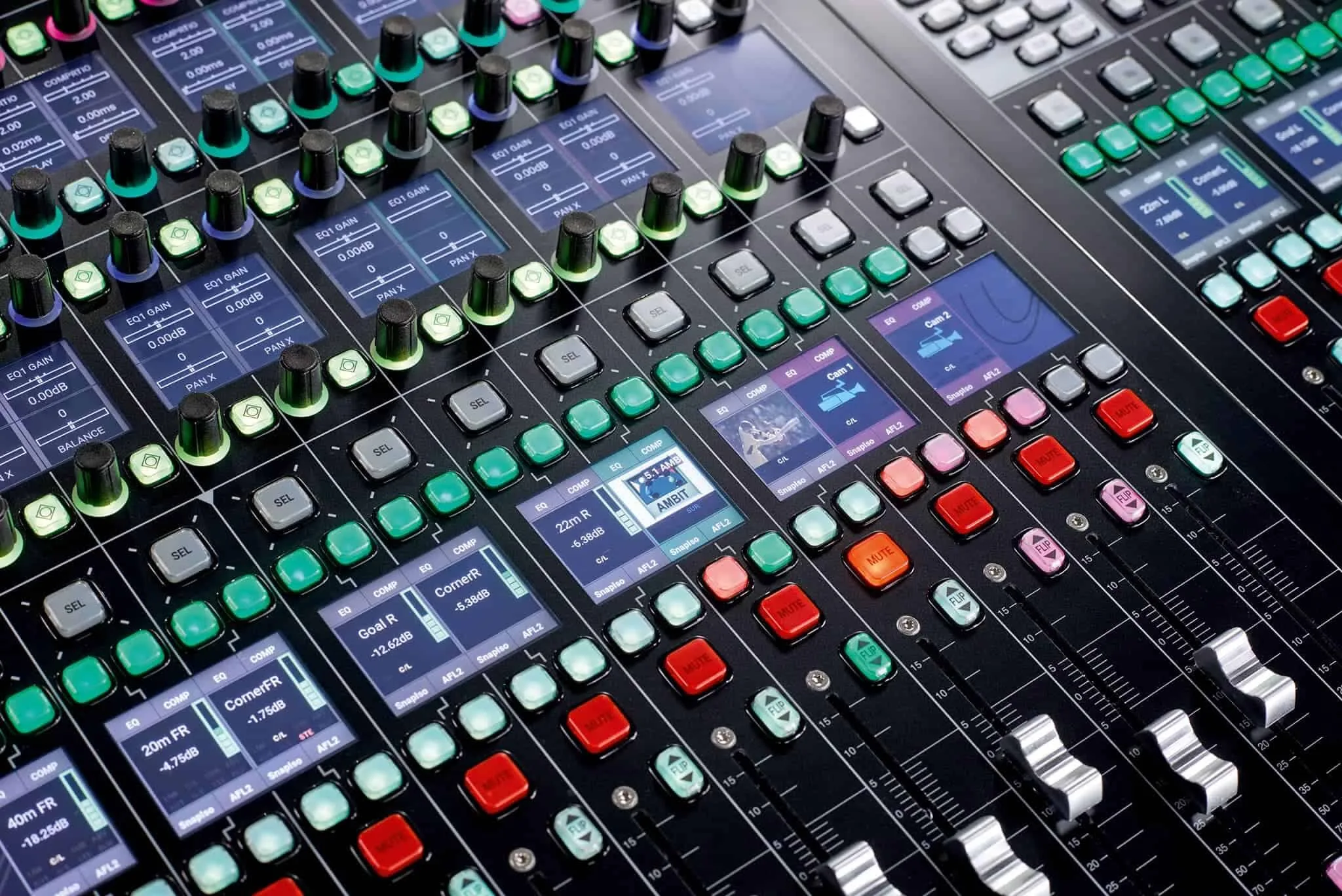
In addition to Button-Glow and colored, touch-sensitive encoders, new color-TFTs slow for an even more obvious color-coding of the central control strips, resulting in enhanced visibility and faster access, even in low light conditions.
Interaction
A perfect Symphony of Hardware and Software Controls
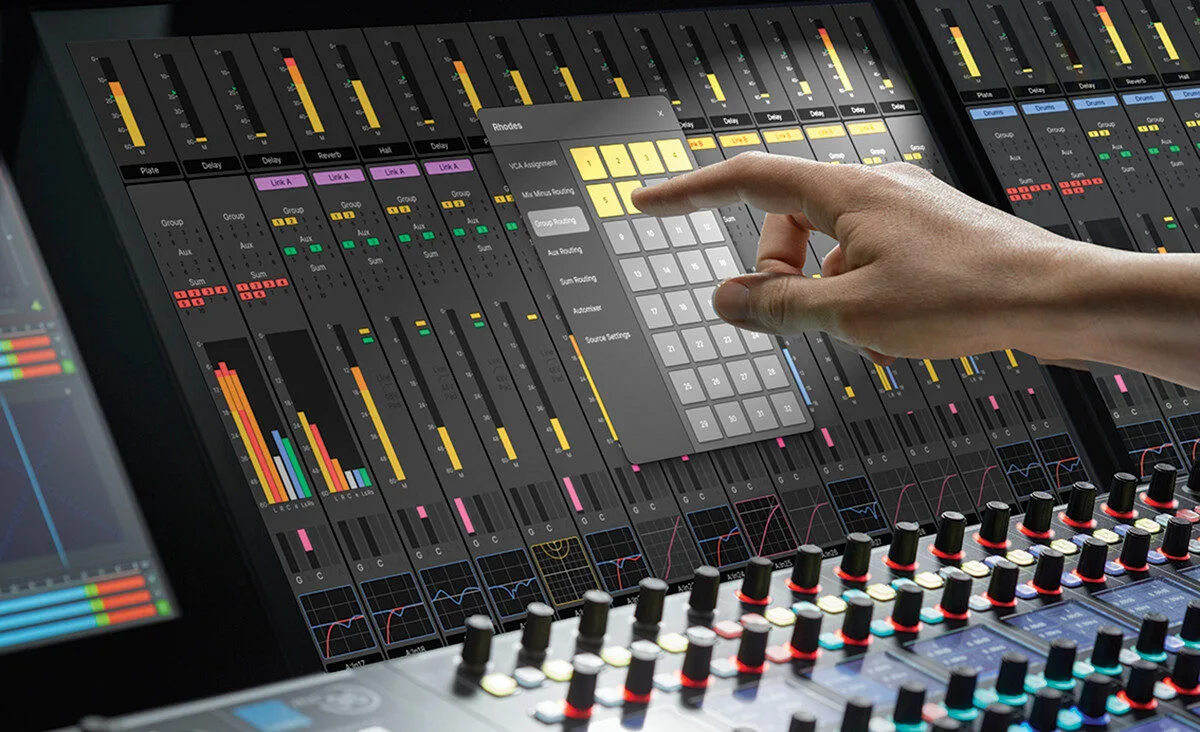
The mc²56’s unique design combines large screens with a low over bridge height to provide a more ergonomic profile without compromising an engineer’s view. The console’s super-precise 21.5″ full HD touchscreens work hand-in-hand with the touch-sensitive, color-illuminate rotary encoders. An equalizer window will automatically pop up when touching the equalizer encoders, and after adjusting the parameters, the auto-close function will close the window without additional user action, to restore the full overview. Close positioning of the TFTs and encoders provides a constant and clear overview of parameters and graphs.
Super-Precise HD Touchscreens
The mc²56 features state-of-the-art capacity-sensing 21.5″ full HD touchscreens, providing mechanical robustness and super-precise control.
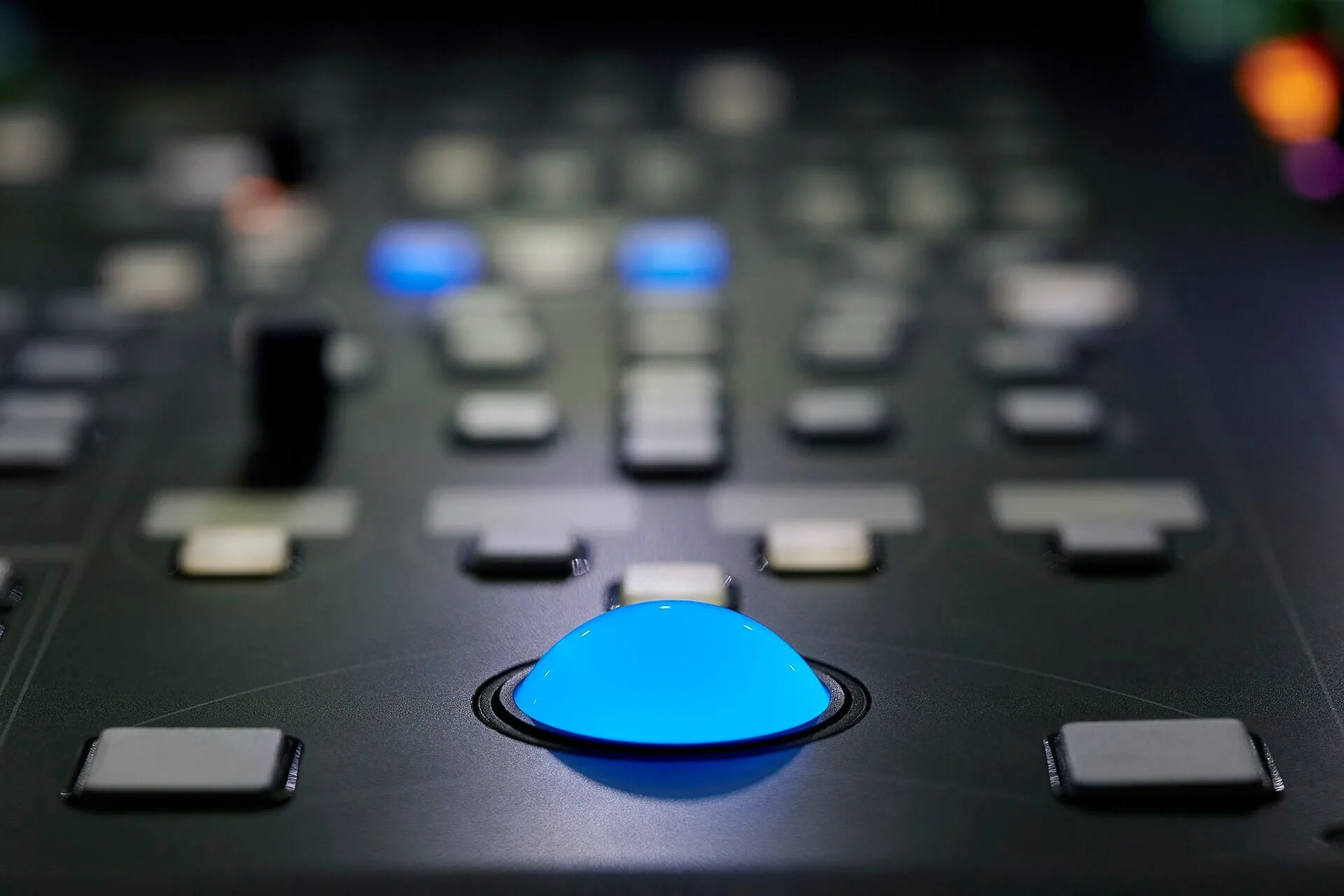
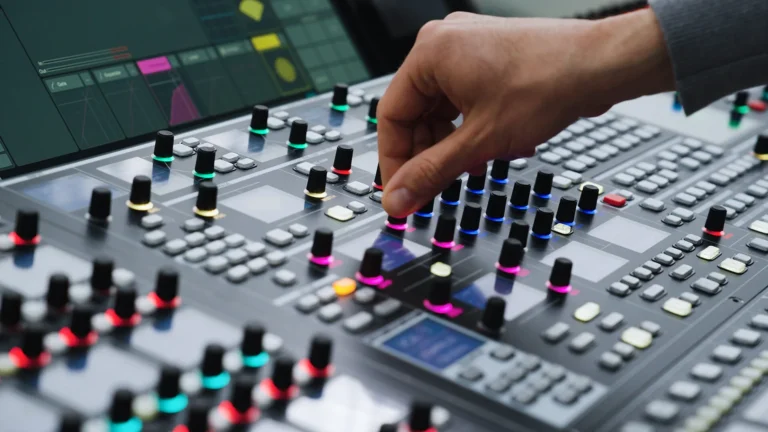
Touch-Sensitive, Color-Coded Encoders
An equalizer window will automatically pop up when touching the equalizer encoders, and after adjusting the parameters, the auto-close function will close the window without additional user action, to restore the full overview.
Multi-User Operation
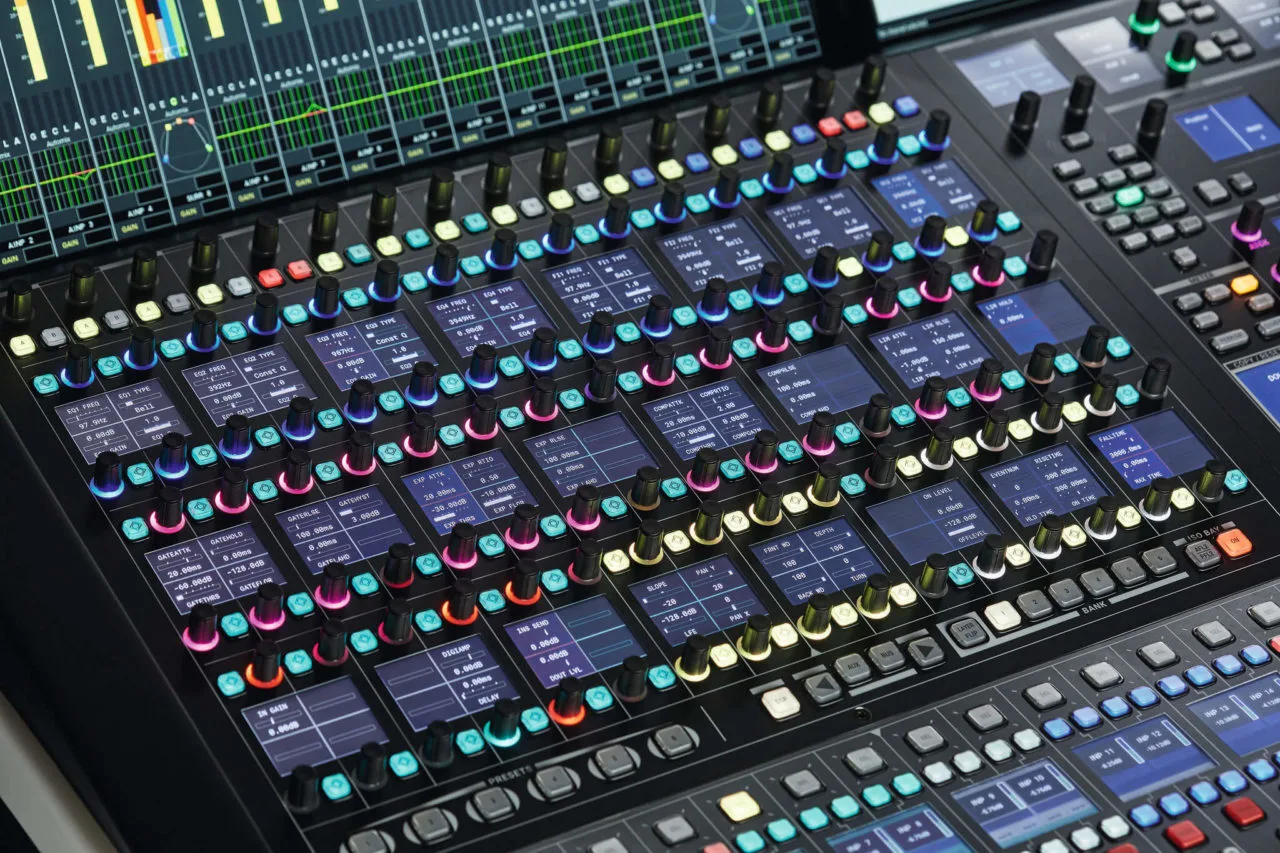
In multi-user mode, 64 rotary encoders in each 16-fader bay give direct access to all important parameters to create an additional central control panel and allow for independent operation and monitoring of a second engineer.
Extended free Controls
The new mc²96’s extended free control section gives direct access to four parameters in addition to gain control. The result: A perfect balance between de-centralized and centralized control workflows. The console allows both global and individual parameter assignments to the free controls of each channel strip.
Features
HOME — Simple as Analog
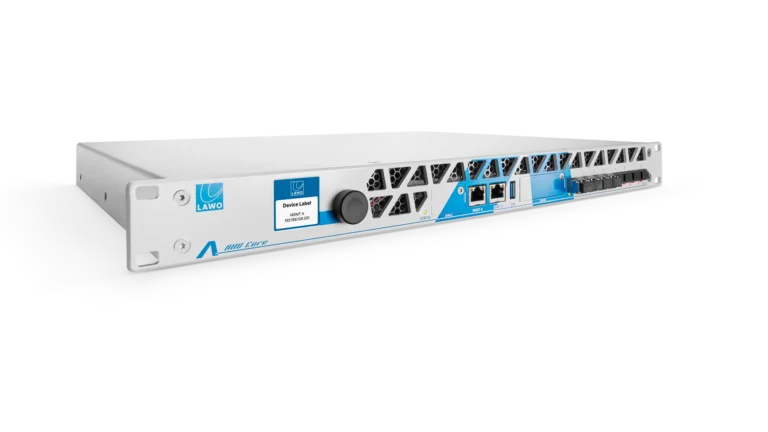
Being an IP-native device powered by A__UHD Core, the mc²96 is a HOME-native, which makes configuring IP setups as simple as analog. The system automatically detects devices and makes them available to the console at the push of a button. Furthermore the console’s device management includes all needed security features such as access control and quarantining of unknown devices.
Selectable Channel Labeling
In addition to standard channel labeling via channel numbers and individual text labels, the mc² 56 allows users to use static pictures or icons for even more intuitive channel identification. Simply touch a fader and the graphic switches to to full-screen mode.
Technical Design
Comprehensive Local I/O
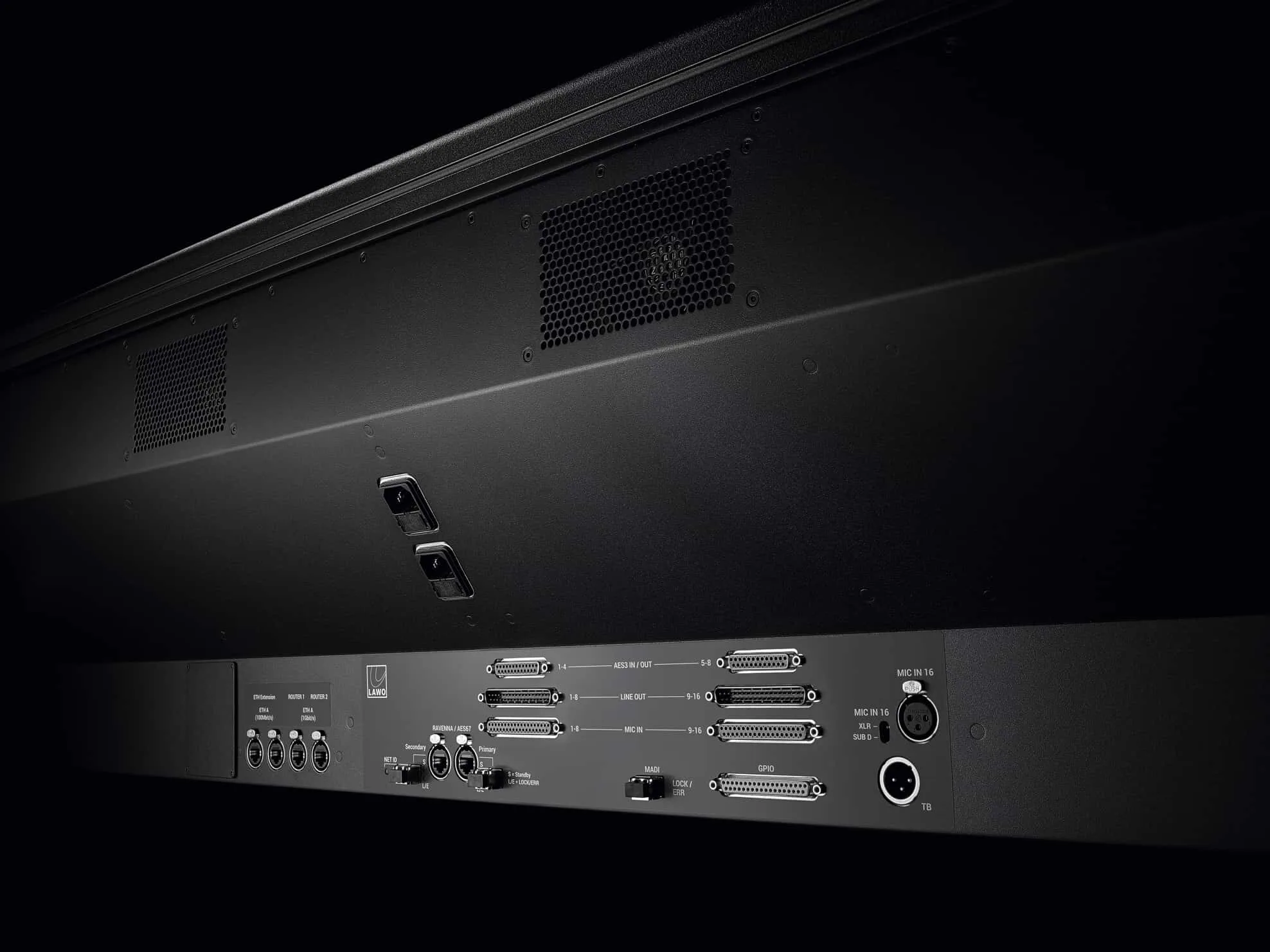
The mc²96’s comprehensive local I/O features 16 Lawo-grader Mic/Line inputs, 16 Line outputs, 8 AES3 inputs and outputs, 8 GPI/O’s plus a local MADI port (SFP).
Redundant Local I/O Connectivity
The console’s local I/O provides two IP network interfaces for redundant connection of the surface’s local I/O to the A_UHD Core following ST2022-7 hitless merge principles of stream and port redundancy.
Low-Noise Design
The console is optimized for low power consumption, which allows the use of inaudible, low-spinning fans for cooling. This is especially important in environments where fan noise can be obtrusive.
Central Control Section
Parallel Compression
Parallel compression, also known as New York compression, is a dynamic range compression technique achieved by blending a dry signal with a compressed version of the same signal. Rather than bringing down the highest peaks for the purpose of dynamic range reduction, it reduces the dynamic range by bringing up the softest sounds, which results in adding audible detail. Parallel compression can be applied in every channel, group, AUX and sum of the mc²96.
Audio-Follows-Video
Automated transitions and the perfect coupling of image and sound – all of this is provided by the mc²96’s Audio-follow-Video function. Each camera tally is assigned to an event, which can be selected in one or more channels with a total of 256 available events. The Rise-Time, On Time, Hold Time, Max Time and Fall Time parameters can be used to set the processing envelope, creating amazingly smooth and natural sounding transitions from camera to camera.
Immersive by Nature
Reflecting today’s requirements for 3D / immersive audio productions, the mc²96 provides not only superb tools for surround sound mixing, but also a dedicated elevation controller as standard.
Intuitive Monitoring
The monitoring section of the central GUI has been redesigned for easier access, enhanced flexibility and easy adaptation to user requirements.
Come As You Are
User Panels
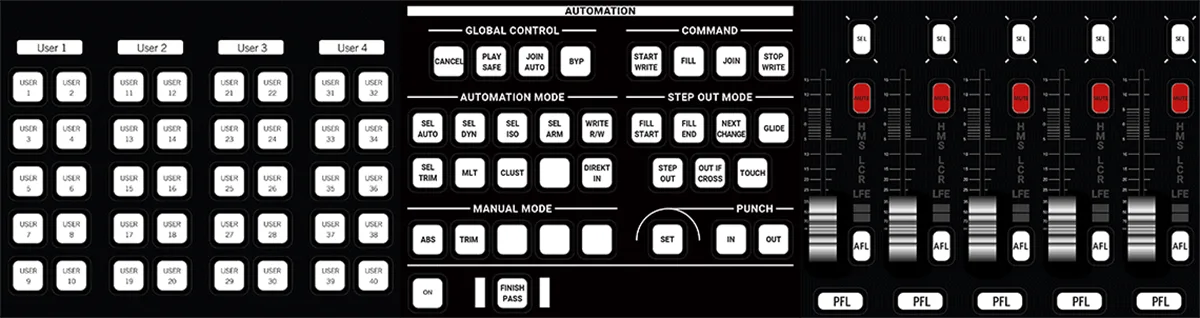
The mc²96’s clearly structured central control section delivers an optimal workflow with maximum overview. In addition, the console’s overbridge contains two slots for individual user panels, which can be filled with a choice of five options: additional 40 buttons, a TC automation panel, a dedicated Reveal Fader panel, a RTW TM7 Goniometer or a RTW TM9 Goniometer (occupying both slots)—the choice is yours.
Automated Mixing Assistants
The mc²96’s automated mixing capabilities include an Automix function that can automatically adjust the Ievels of active and inactive microphones, while maintaining a constant, natural sounding ambient Ievel. This feature provides unique functionality especially in live productions with multiple presenters or performers.
Automix can be used for any signals, from mono and stereo to multiple surround channels to minimize background noise and crosstalk with reduced sound coloration. Truncated sentences and late fade-ins are things of the past, enabling the sound engineer to focus on overall balance and sound quality.
Remote Desktop
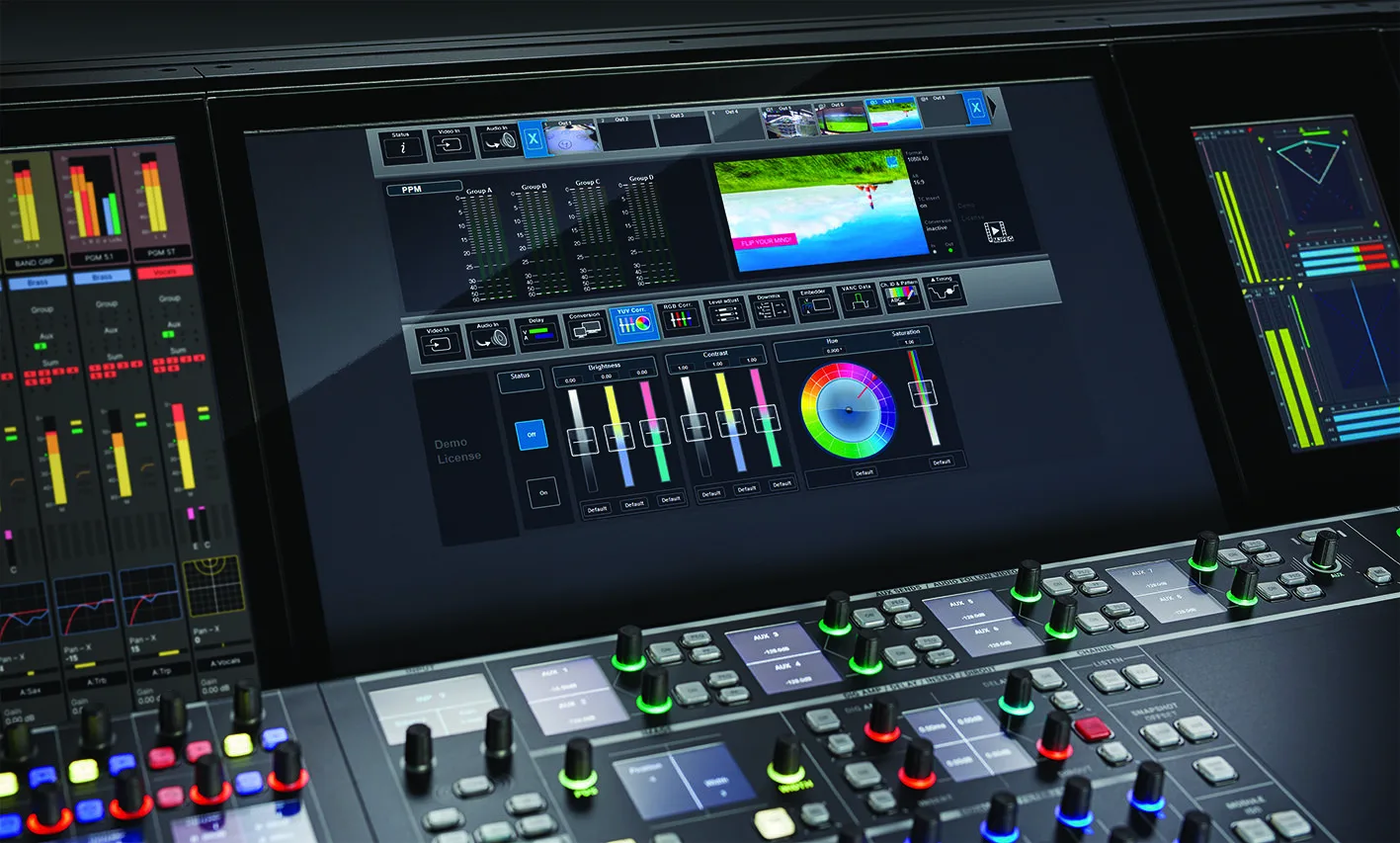
Lawo’s integrated Remote Desktop function allows seamless integration into the console’s user interface of multiple external PCs running third-party solutions. With the switch of a button, the external PC and its software applications are displayed in the console’s screen while the console’s keyboard, touchpad and touchscreen provide control.
The seamless integration of external recording systems, effect engines, or other user interfaces, means less equipment – and the engineer has control over the complete set-up, conveniently from a single, central position.
Overbridge
Customziable Overbridge Views
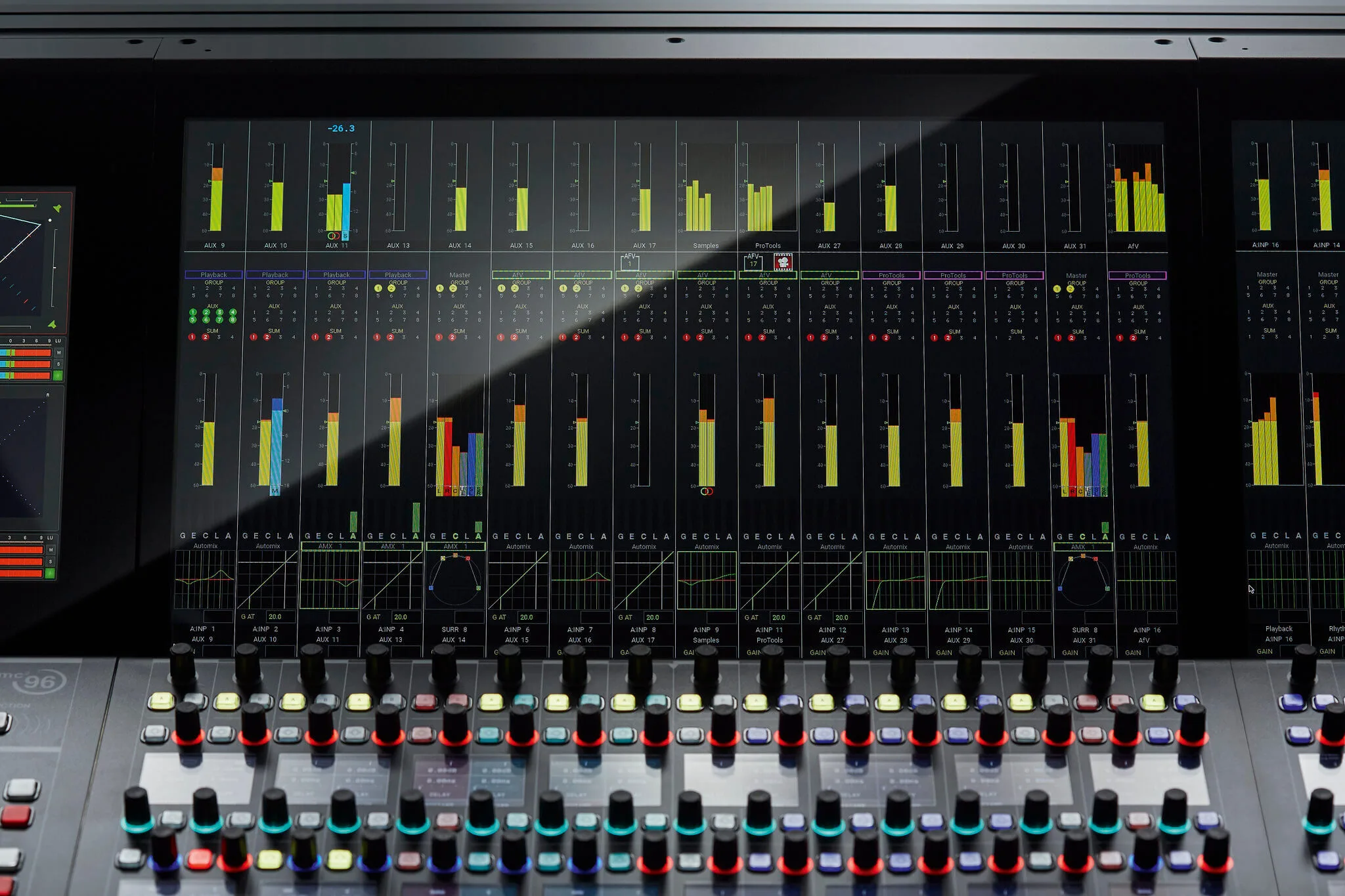
The console’s overbridge can be adapted to your requirements by adjusting the channel display accordingly – just choose and display those parameters that are important and hide any unnecessary or distracting elements.
The metering shows all fader Ievels permanently on the HD display. ln addition, multi-row metering allows for permanent metering of signals from other layers or banks.
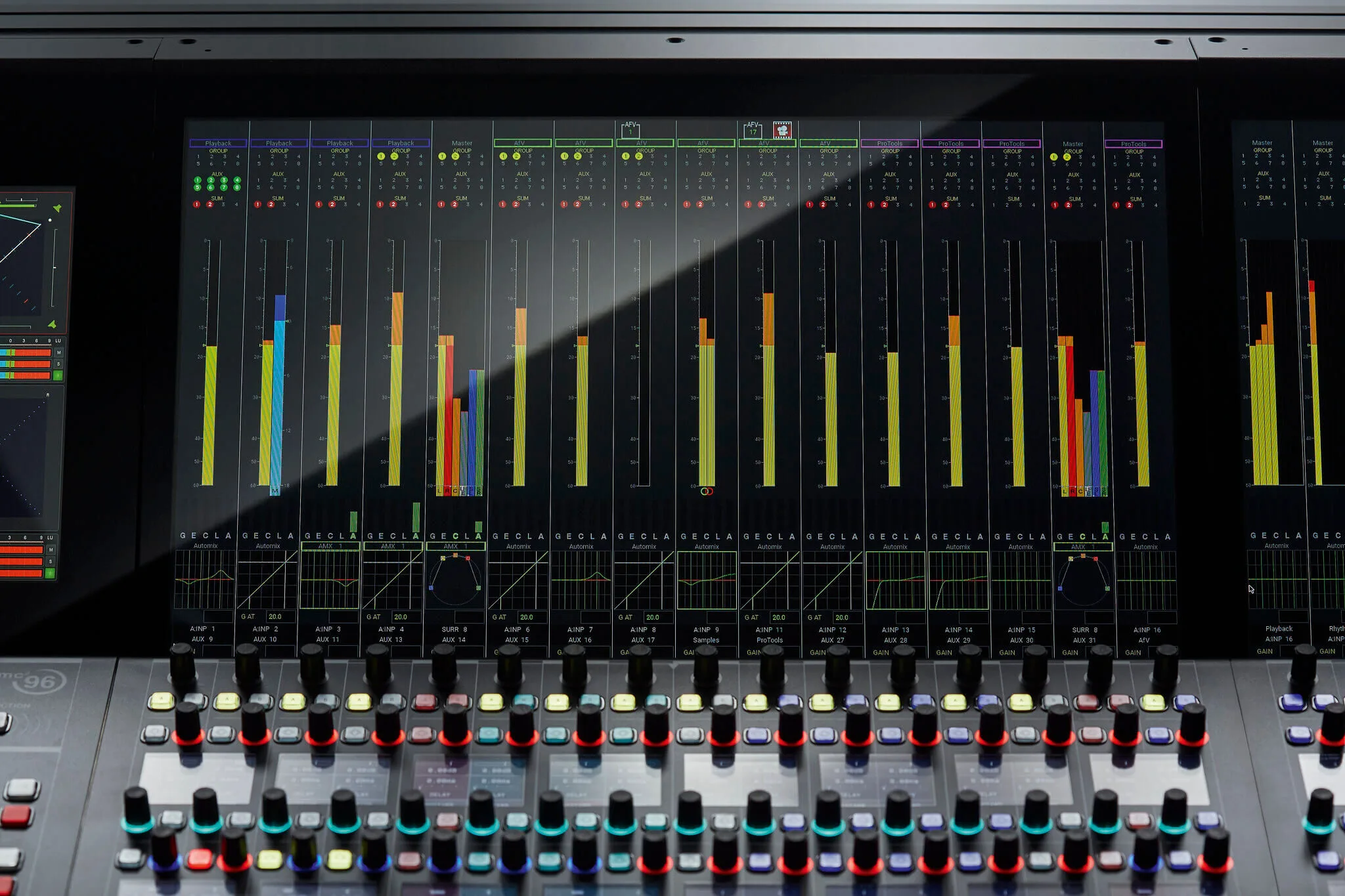
Integrated Loudness Metering
Originally requested for broadcast applications, Lawo has developed built-in loudness metering into a tool that is useful also in live, theater and house of worship applications. The feature provides full loudness control in accordance with ITU 1770 (EBU/R128 or ATSC/A85) and features peak and loudness metering either separately or in combination.
ln addition to the sums, Lawo Loudness Metering can also measure individual channels, which allows fast and convenient “visual” mixing for things like background singers or multiplemicrophone setups for brass sections, strings and choirs.
Specifications
Control Panel
- Frames from 16 to 208 faders*
- Remote stand-alone frames of 16 faders
- 6 banks each with 2 layers
- 100 mm fader + 4 freely adjustable rotary knobs or 100 mm + 60 mm dual faders + Input-Gain controller + channel display for each fader with sense-triggered change of module display
TFT metering: mono, stereo or multi-channel immersive, including bus assignment, gain reduction for dynamics, AfV status, VCA assignment, Mix-Minus, Signal Patching, Meter selection, Automix state - GUI page output, e.g. metering, on an external monitor
- 8 user buttons, 4 talkback buttons and 4 user buttons per fader, with 16 functions each
Optional: two integrated user panels (TC automation panel, 40 user button panel, reveal fader panel, RTW TM7 or TM9 Phase Scope), script tray
* With dual fader option
Signal Processing
- 40-bit floating point
- A__UHD Core: 1,024 DSP channels (number of inputs and buses depends on A__UHD Core and configuration); immersive audio support up to 9.1.6; Up to 1024 inputs with A/B/C input; up to 96 busses
HOME mc² DSP: 2,496 DSP channels; immersive audio support up to 9.1.6; up to 448 busses - Supported audio formats: A__UHD Core – SMPTE ST2110-30/31 (incl. RAVENNA, AES67)
HOME mc² DSP – SMPTE ST2110-30 (incl. RAVENNA, AES67), NDI, SRT and Dante* - Up to 256 AUX busses, up to 96 groups, 96 sums, up to 128 VCA groups with metering, 256 GP channels
- A__UHD Core: up to 32 Automix groups per virtual A__UHD Core mixer
HOME mc² DSP: up to 32 infinite Automix groups - 3D multichannel downmixing for all supported immersive channel counts
- Rapid switching of channel and bus to mono / stereo / surround
- 2 AFL: 1 immersive audio, 1 stereo
2 PFL: stereo - Audio-follows-Video with 256 events, control via Ember+, GPI or matrix connection, envelope up to 10s fade time
- Solo In Place
- 5 independent dynamics modules: expander, gate, compressor (incl. parallel compression), limiter, de-esser; image, meter, direct out; multi-channel processing
- Adjustable INPUT, PF, AF, DIROUT, TRACK meter point in channel display
- Loudness metering according to EBU R128 and ATSC A/85, momentary or short term in every channel, integrated measurement on sum channels with display of integrated LUFS value in headline
- Modules: INMIX with MS decoder, digital amp, 2-band fully parametric filter, 4-band fully parametric EQ, 2-band fully parametric side chain filter, insert, delay up to 1800 ms – switchable units: meters, milliseconds, frames
(*) Dante support for HOME mc² DSP is a future product development. For A__UHD Core, it requires a Power Core with a Dante card, which is readily available.
Audio Handling
- HOME – Routing with dynamic support of network resources
- Internal matrix for RX and TX audio
- A__UHD Core stream sizes from 1 up to 128 audio channels
HOME mc²DSP stream sizes from 1 up to 64 audio channels - A__UHD Core: Up to 96kHz, 24-bit
HOME mc² DSP: Up to 48kHz, 24-bit - Downmixing from immersive audio to stereo
- Integrated monitoring devices for remote locations, e.g. director’s room
Internal loop-backs - Full Snapshot and production portability independent of matrix and DSP size
Waves® Plugin Integration
- Waves SuperRack SoundGrid® and SuperRack LiveBox using new Waves ProLink API; synced snapshot generation in Waves
Interfaces
- Mic / Line, Line Out, AES3, 3G SDI, HD-SDI, MADI, GPIO, Serial, MIDI, ST2110 / AES67 / RAVENNA Audio-over-IP
- Stereo and surround monitoring systems
- Headphones
Synchronization
- Wordclock, PTP Slave and Grandmaster modes
Redundancy
- PSUs, Network Interfaces (ST2022-7 Class C)
Control unit
- Global A / B / C input switching
- Enhanced mix-minus control with independent off-air conference
- Fader control of all level parameters
- Diverse tally and fader start modes
- Program switch
- DAW Machine control
- Audio-follows-Video, up to 128 camera tallies, Ethernet or GPI controlled
- Camera mic remote via GPI or voltage control
Remote Maintenance
- Connection via mxGUI remote software
- Software updates, error diagnostics, remote assistance
External Control Systems
- Remote control of all routing, matrix monitoring units and channel parameters via Ember+ control protocol
mxGUI: remote control via Windows® or macOS laptops - External Broadcast and Automation Controllers: Lawo VSM, EVS Cerebrum, Broadcast Solutions Hi, GV Ignite, Ross Overdrive & Acuity, Vizrt Viz Mosart, and others
Get in Touch
Associated Products
A__UHD Core
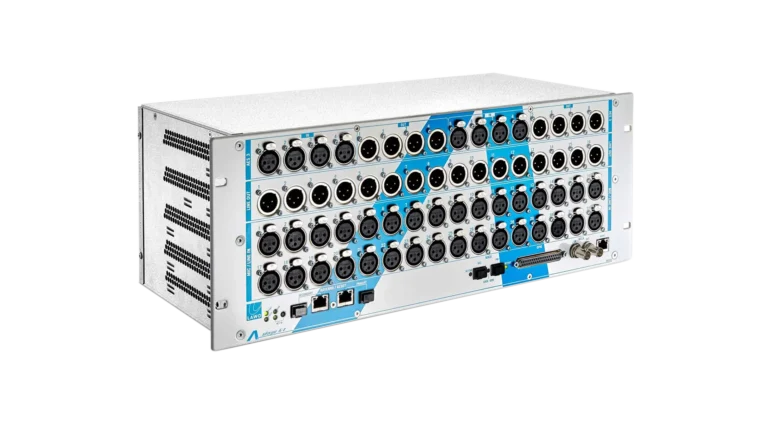
A__stage and A__line
Power Core RP
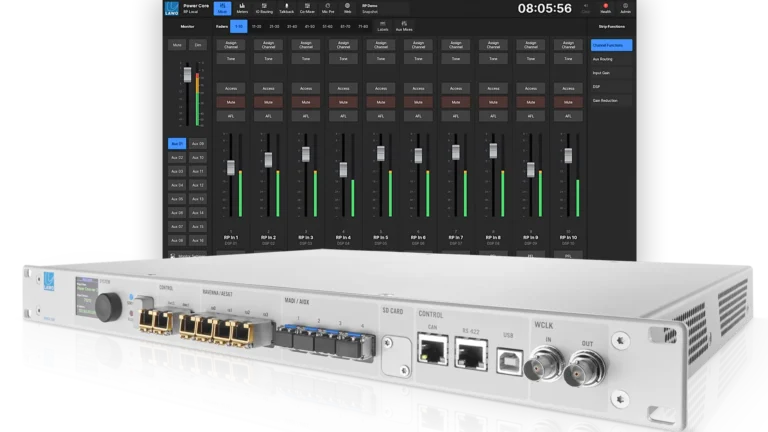
mxGUI
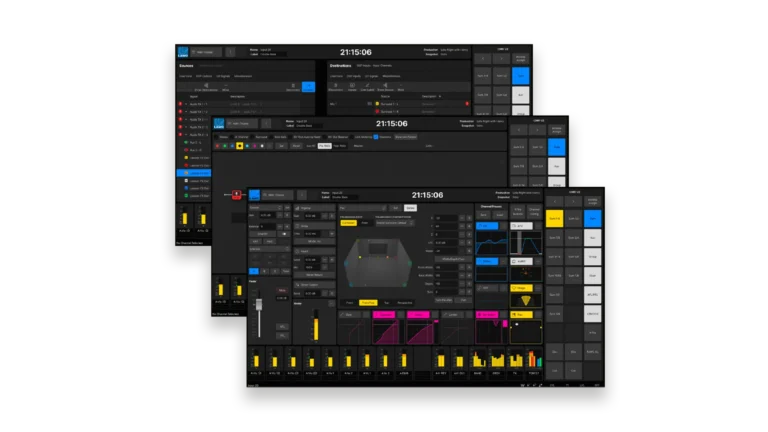
mc²56