OB Trucks & Mobile Production
Engineering the Next Generation of OB Trucks
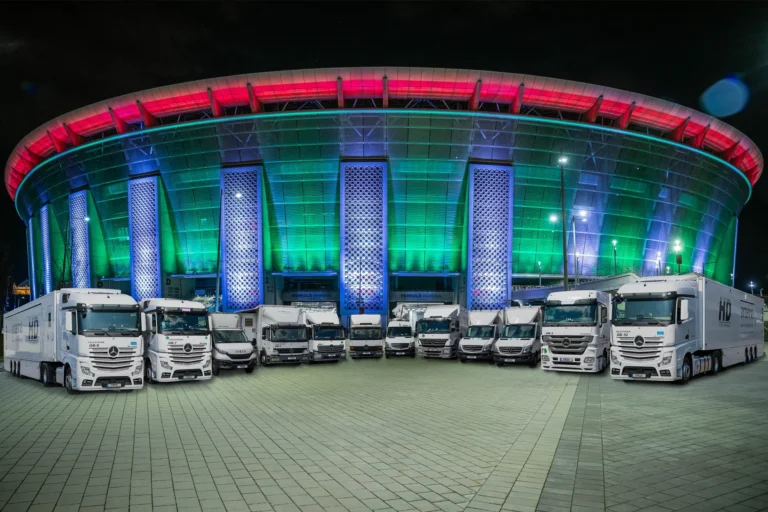
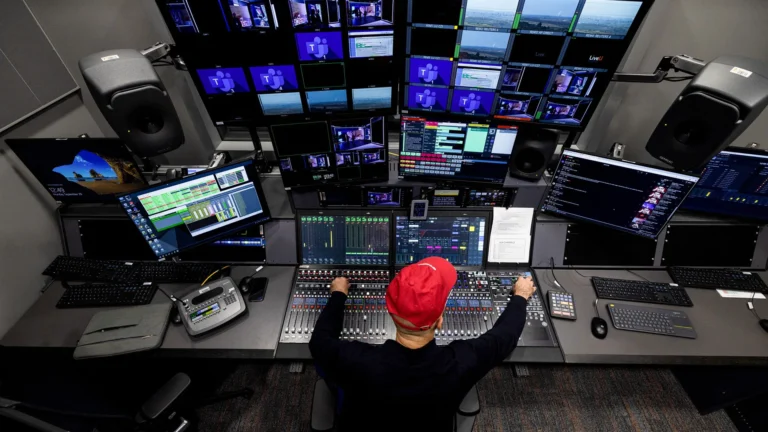
Building an OB truck today means designing a fully IP-based production facility on wheels — software-based, scalable, and engineered to integrate with remote hubs, sister trucks, and central facilities over standard network infrastructure. New units are commissioned almost monthly to cover the world’s highest-profile sports, entertainment, and cultural events, and most are now hybrid SDI/IP or fully IP-native from the ground up. Many operate in tandem with other trucks or remote production centers, forming a distributed production facility that travels with the event rather than being tied to a single location.
Lawo has been the infrastructure partner of choice for the world’s leading OB truck builders and fleet operators for decades. From the largest sports broadcasters in North America to national public broadcasters across Europe, our audio consoles, processing engines, workflow control systems, and facility management platforms form the backbone of the most ambitious mobile production units on the road today. As truck builders move toward software-based, hardware-agnostic architecture, Lawo’s open-standards IP infrastructure ensures that every truck commissioned today is engineered for the production demands — and formats — of tomorrow.
Applications for OB Truck Builds
Live Sports Production
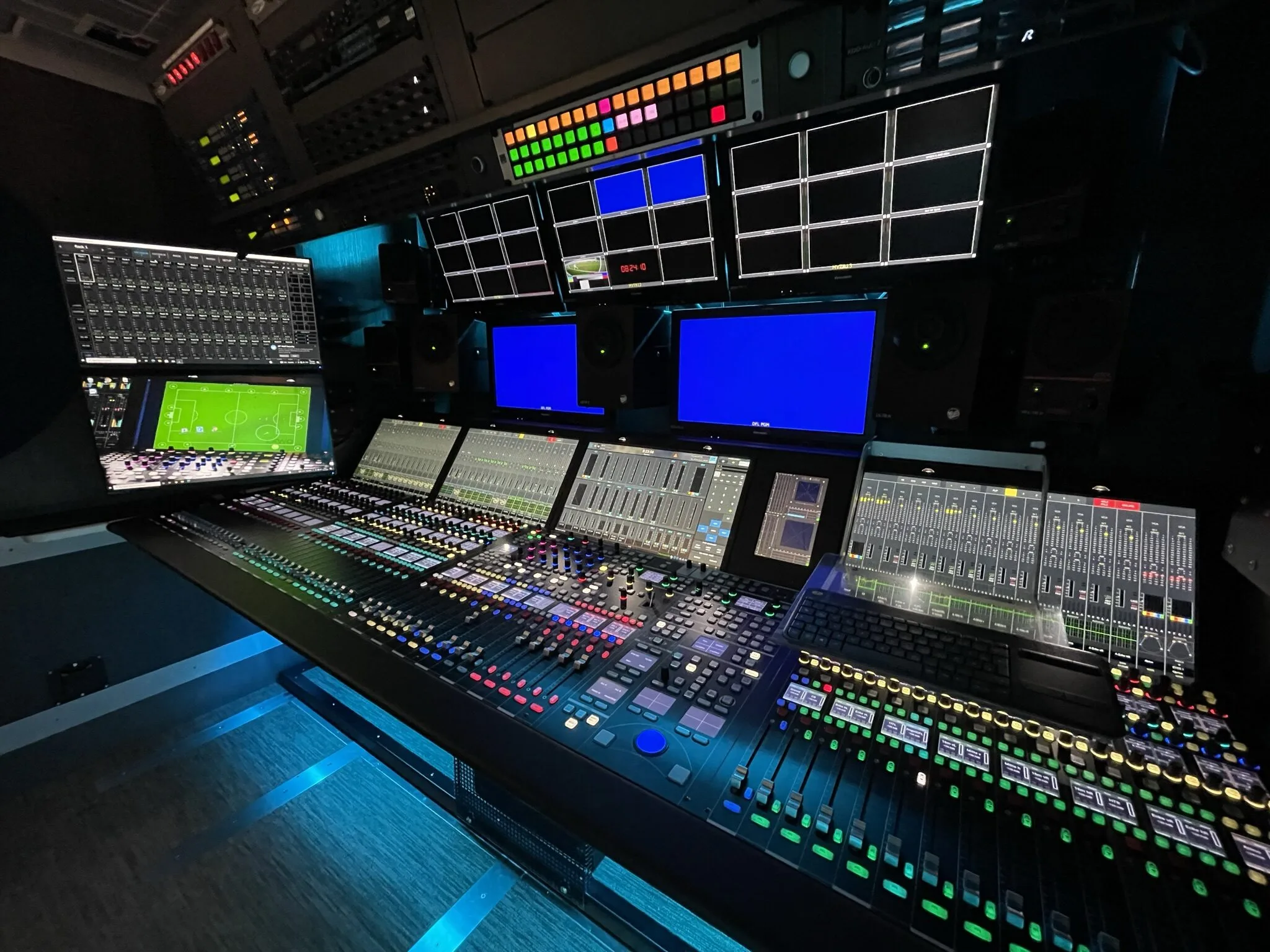
From football and motorsport to winter sports and tennis grand slams, live sports production demands the highest channel counts, the fastest scene recall, and the most reliable signal chains in mobile broadcast. Lawo’s truck-grade infrastructure delivers the processing headroom and operational flexibility major sports productions require — packed into the smallest possible rack footprint.
Entertainment & Cultural Events
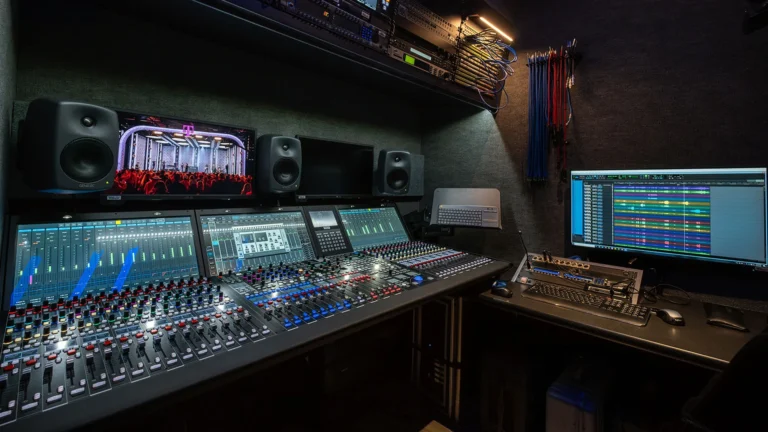
Concerts, award shows, and cultural broadcasts demand pristine audio quality and the ability to adapt to productions that evolve right up to air time. Lawo’s mobile platform integrates natively with immersive audio formats, giving truck-based production teams the tools to deliver broadcast-grade and streaming-ready mixes simultaneously, from the same signal chain.
Multi-Truck & Networked Production
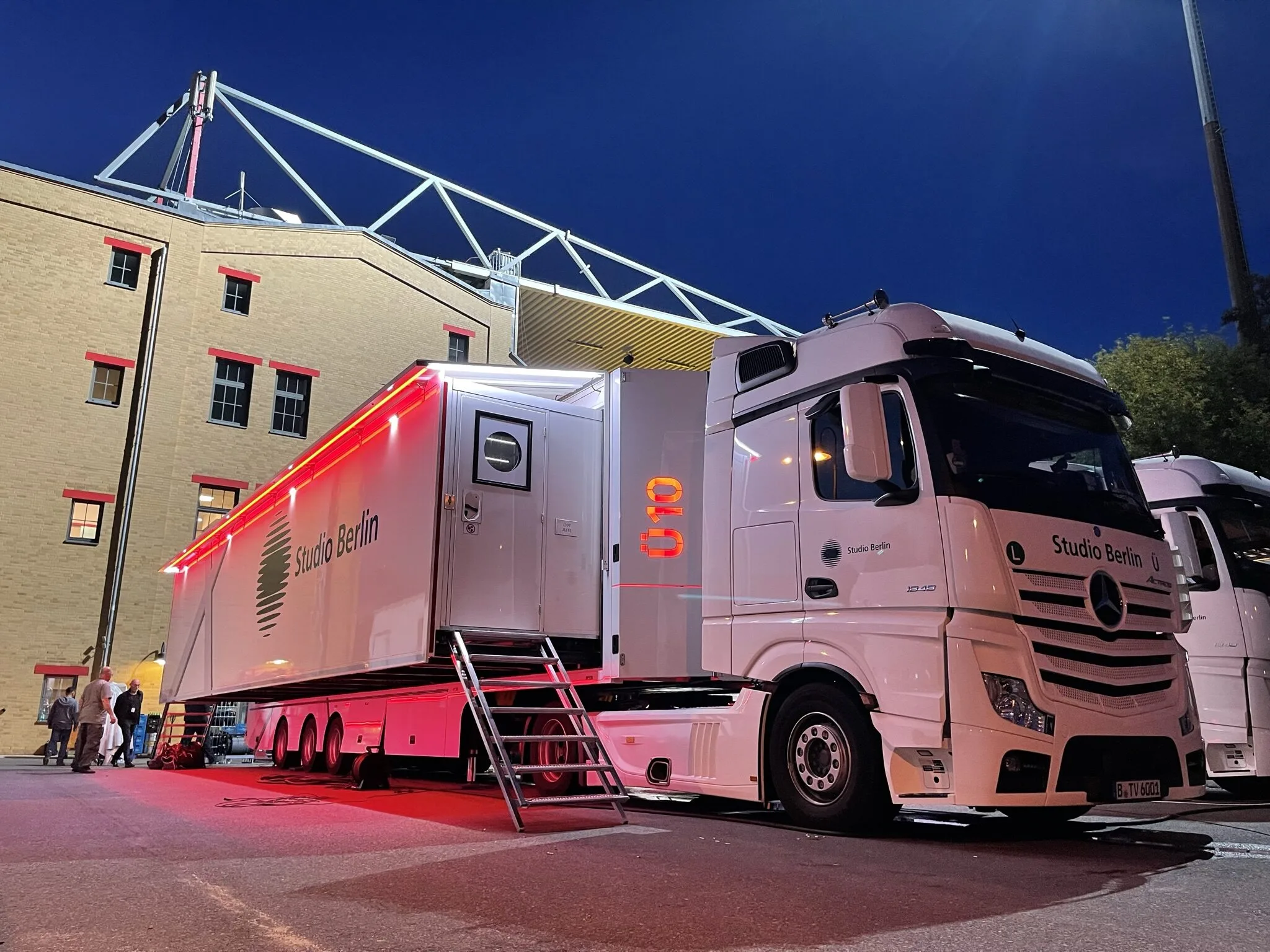
For the largest events, two or more OB trucks need to operate as a single, unified production facility. Lawo’s workflow control infrastructure enables truck-to-truck and truck-to-facility network bridging — sharing sources, routing signals, and managing workflows across multiple independent IP infrastructures as if they were one vehicle.
Hybrid SDI/IP Truck Builds
Not every truck needs to be fully IP from day one. Lawo’s infrastructure supports hybrid SDI/IP truck architectures, allowing builders and operators to transition incrementally — protecting existing equipment investments while engineering a path toward a fully IP-native mobile production platform at their own pace.
Solutions for OB Trucks
Built for the Demands of OB Truck Builds
Mobility & Speed
Deploy faster with compact, modular systems that reduce setup time and simplify logistics.
Operational Efficiency
Streamline workflows and reduce crew requirements with remote production scenarios and automation.
Broadcast-Grade Reliability
Ensure uninterrupted coverage with redundant, IP-native systems built for mission-critical projects.
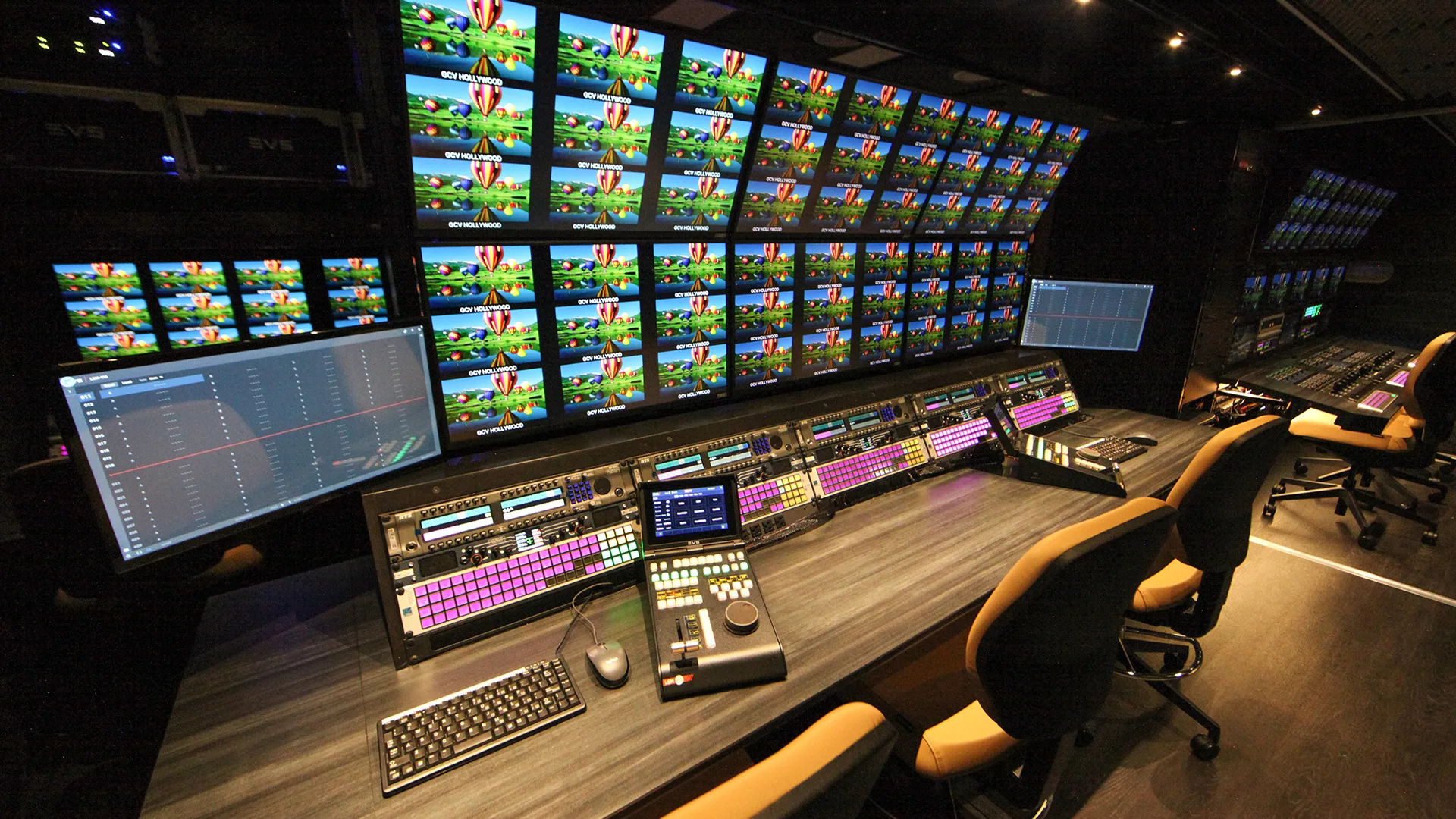
Game Creek Video Hollywood: Next-Gen Sports Production
Game Creek Video’s new mobile production unit generation raises the bar with Lawo’s HOME platform. After 13 highly successful all-IP OB trucks based on their Bravo unit — which already ran on Lawo IP infrastructure — Game Creek Video has launched a new breed of OB trucks built on COTS server architecture for maximum space and weight efficiency.
What Our Customers Say
Our two new OB trucks are among the most advanced on the planet. Their ST2110-based approach has resulted in highly flexible tools for OB assignments of any scale.
Featured Case Studies
The Perfect Truck for Corporate Events and Network Partners
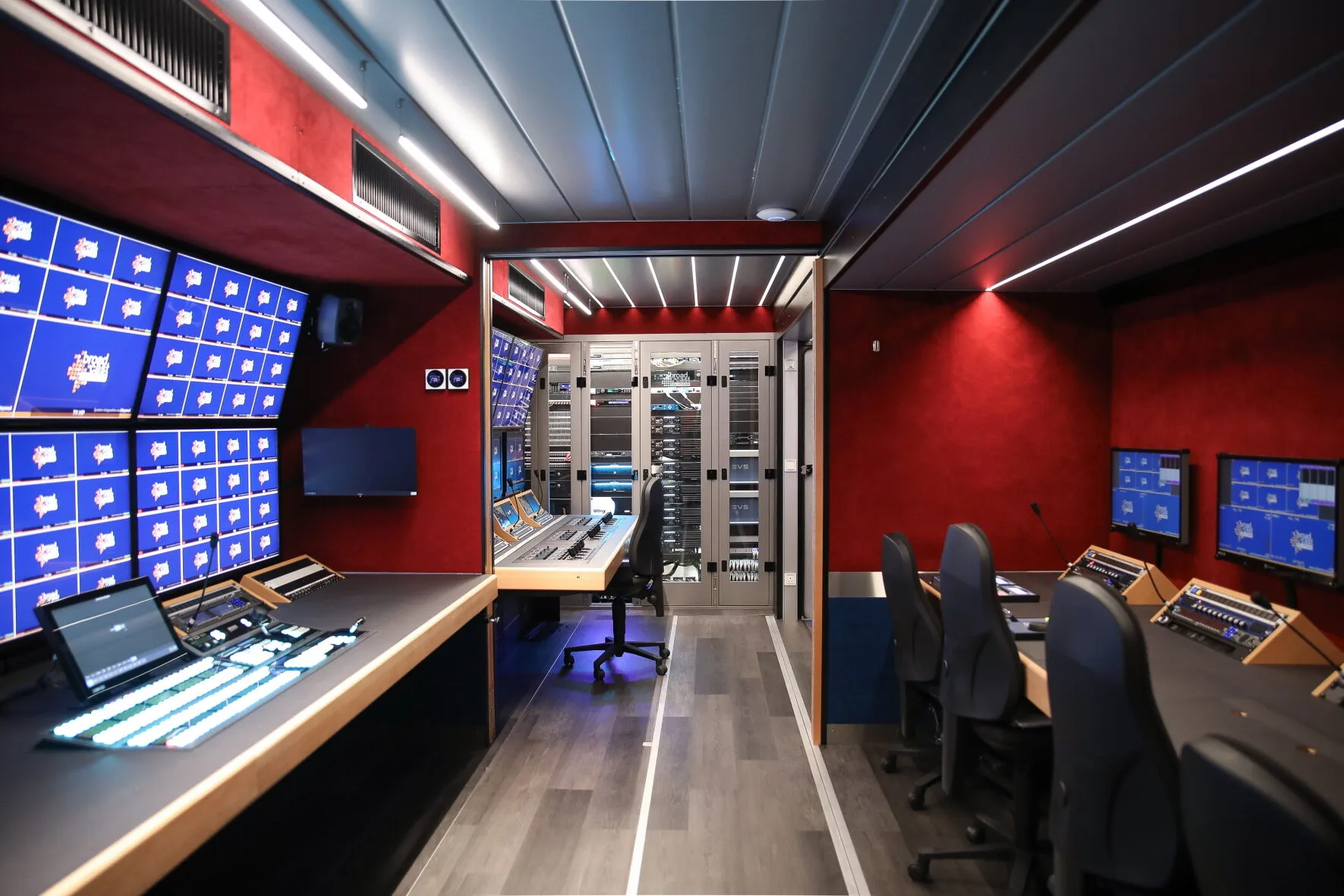
Discover an advanced truck with everything customers can wish for: cinematic video and up to 7.1.4 immersive audio right inside the truck.
Live corporate and entertainment events need to wow their audiences more than ever before. The delivery has become almost as important as the message organizers wish to send. Video walls showing glimpses of attendees as well as close-ups of the action on stage have become a given. The same is true of audio: pristine sound quality mixed by experts for the delivery through a carefully selected and arranged speaker system—increasingly using immersive or spatial audio—is expected.
Hollywood: Next-Gen Sports Production
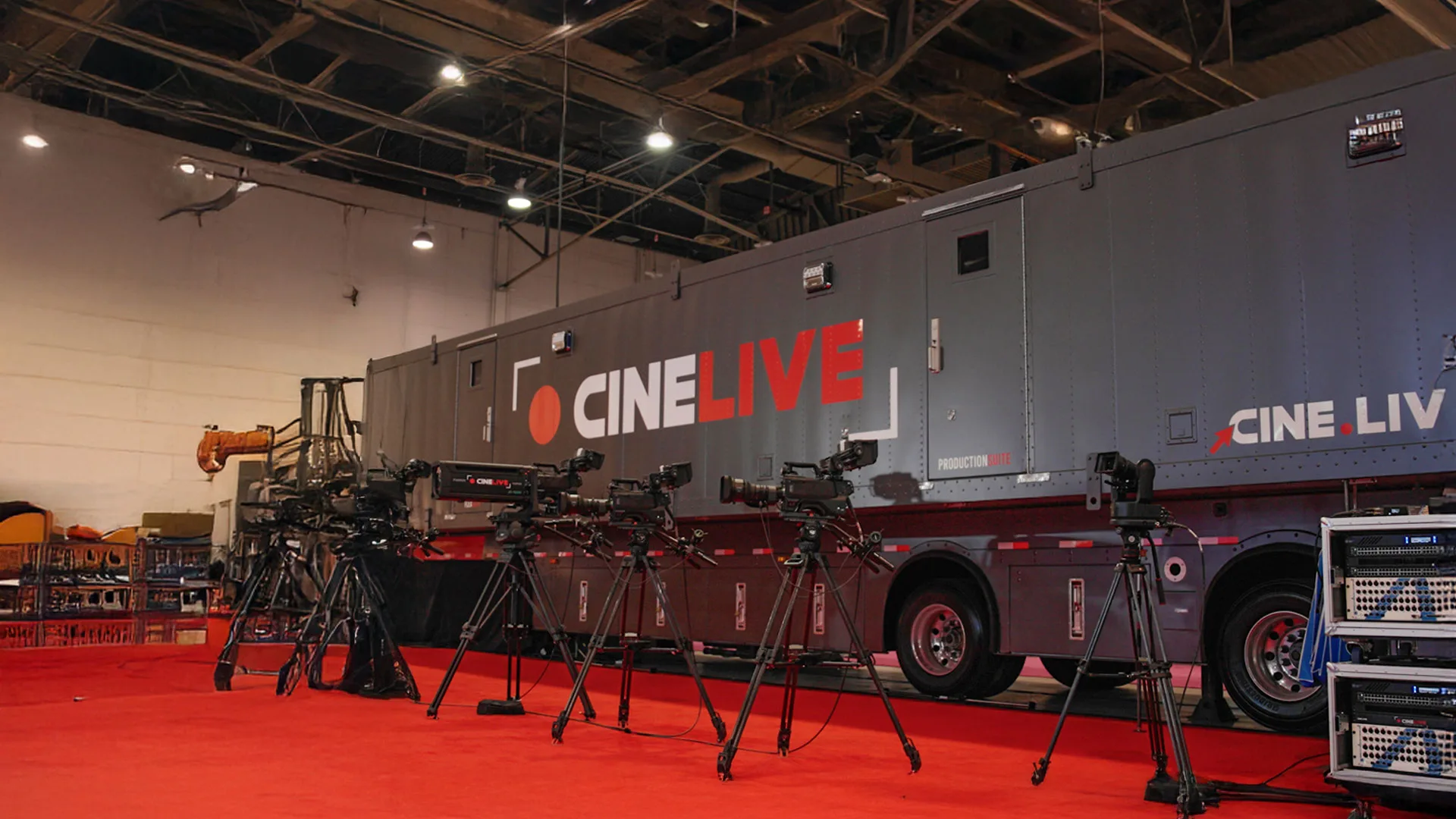
Hollywood, the first in the series, fully embraces Lawo’s unified, open platform and all the hardware/software synergies it provides. Among the top reasons for choosing Lawo’s platform approach are the flexibility the HOME platform affords and the fact that basing GCV’s technology stack on COTS servers leads to even more space and weight reduction than before.
Meet Two of the Most Advanced OB Trucks on the Planet
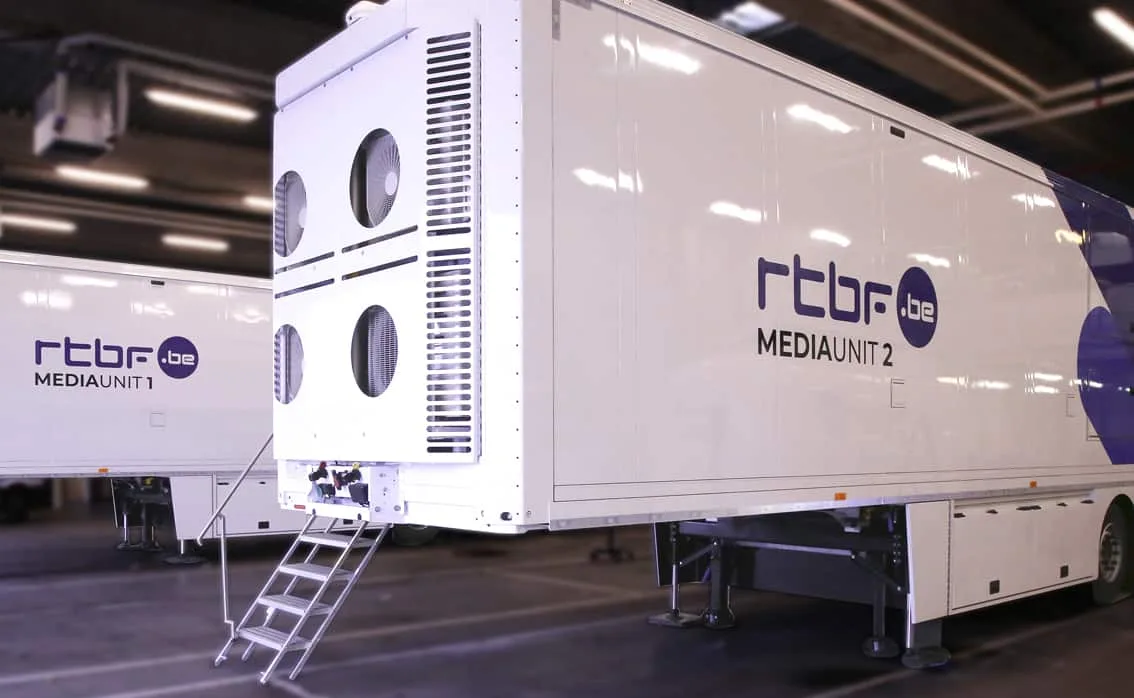
RTBF, Belgium’s public broadcaster for the country’s French-speaking community, took delivery of two groundbreaking, full-IP OB trucks. The 12m long trailers had to be configured remotely in order to be delivered on time, due to the covid-19 lockdown.
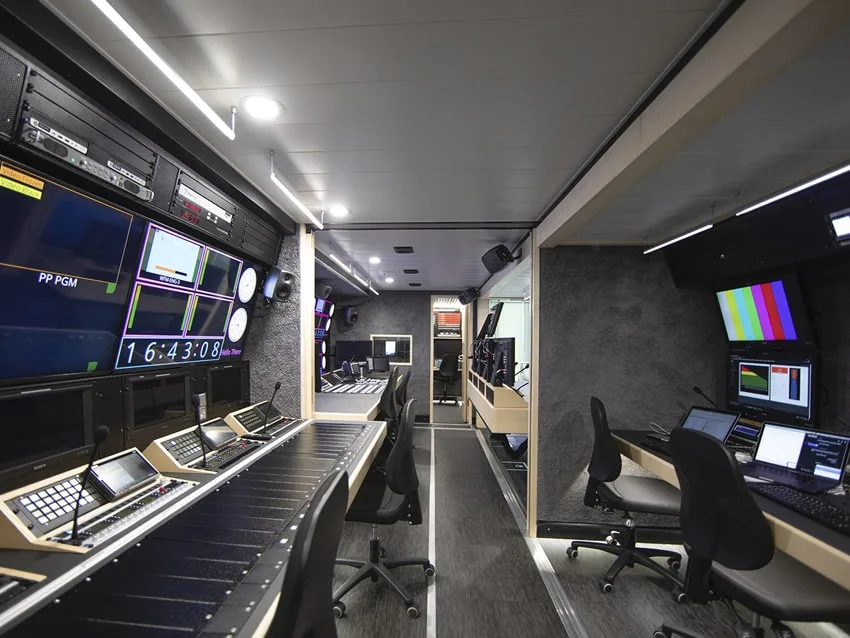
brutal güet Deploys on Cutting-Edge Audio Technology for New OB Truck
Swiss broadcast service provider brutal güet has launched a state-of-the-art outside broadcast vehicle built entirely around IP-based workflows powered by Lawo’s AoIP infrastructure. The OB truck was designed, integrated, and project-managed by German system integrator Broadcast Solutions.
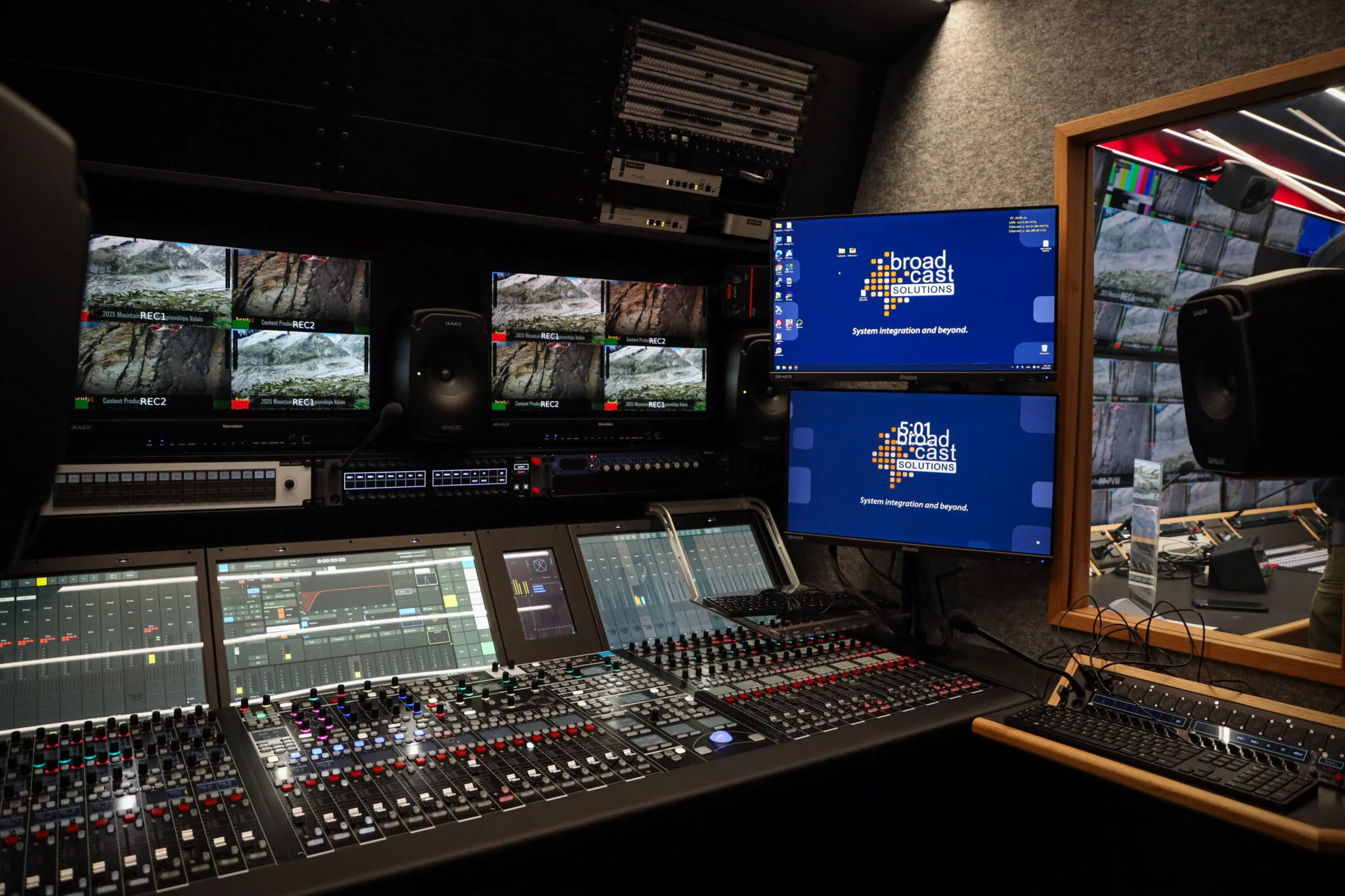
Products for OB Vans
HOME Platform
HOME is a management platform for IP-based media infrastructures and is designed to connect, manage and secure all aspects and instances of live production environments.
HOME Apps
HOME Apps are Lawo’s modular software applications that extend the HOME platform with flexible processing, monitoring, and control—enabling fully scalable, IP‑based broadcast workflows.
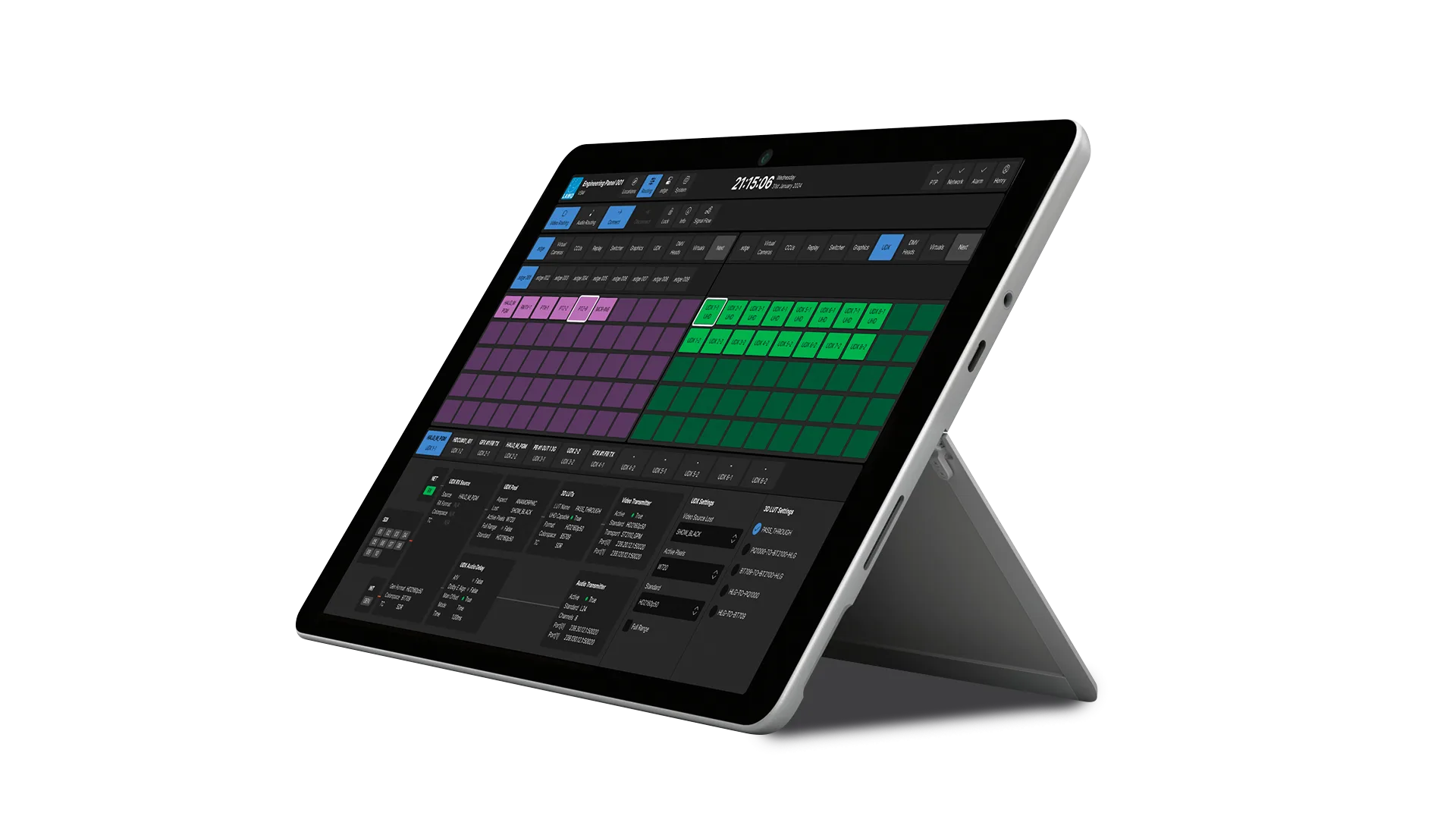
VSM
VSM is Lawo’s powerful, vendor‑agnostic broadcast control and orchestration system that unifies devices, workflows, and operators into one intuitive, IP‑ready control layer.
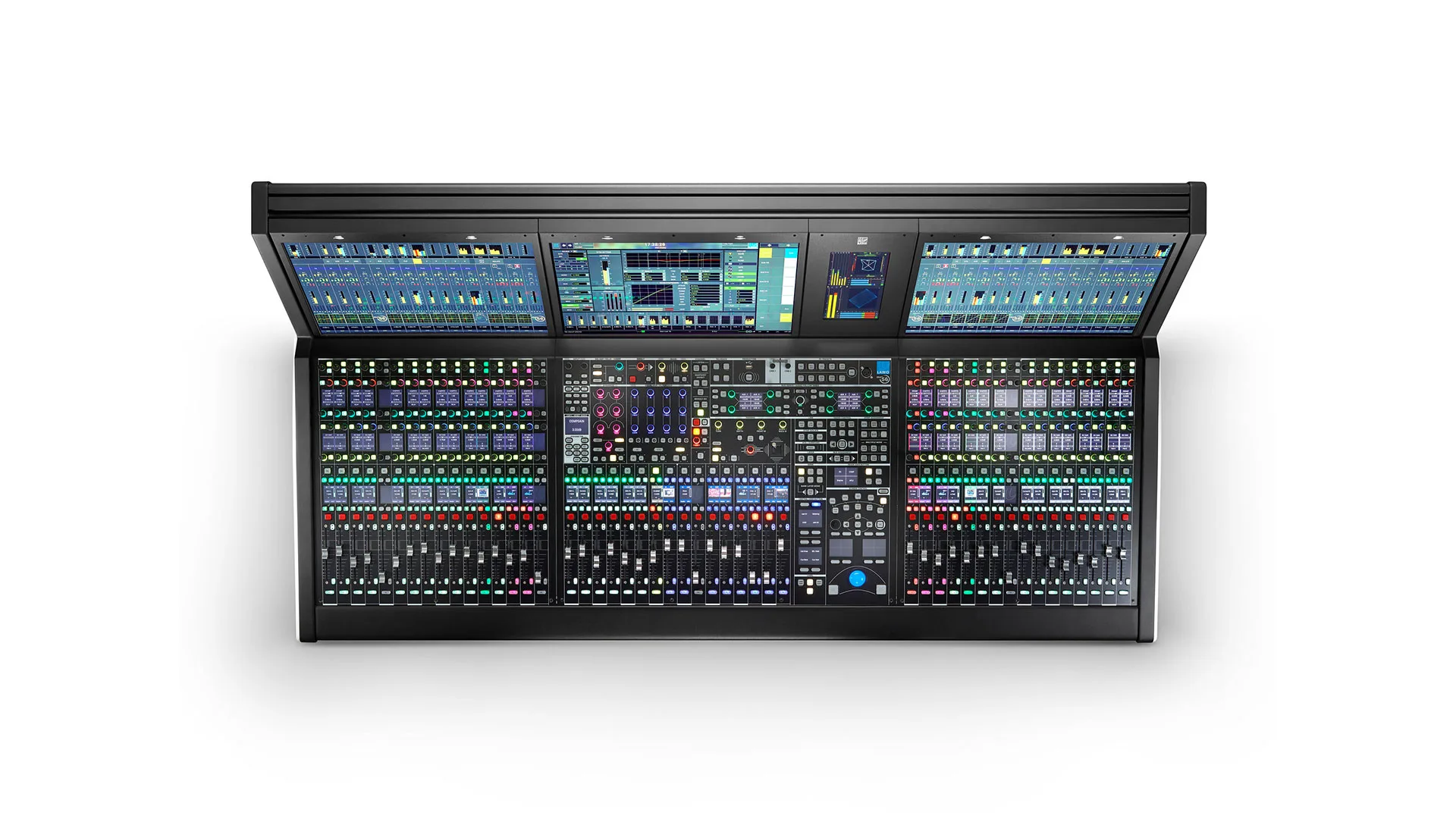
mc² Series
IP‑native audio production consoles offering premium sound quality and scalable performance for broadcast and live production environments.
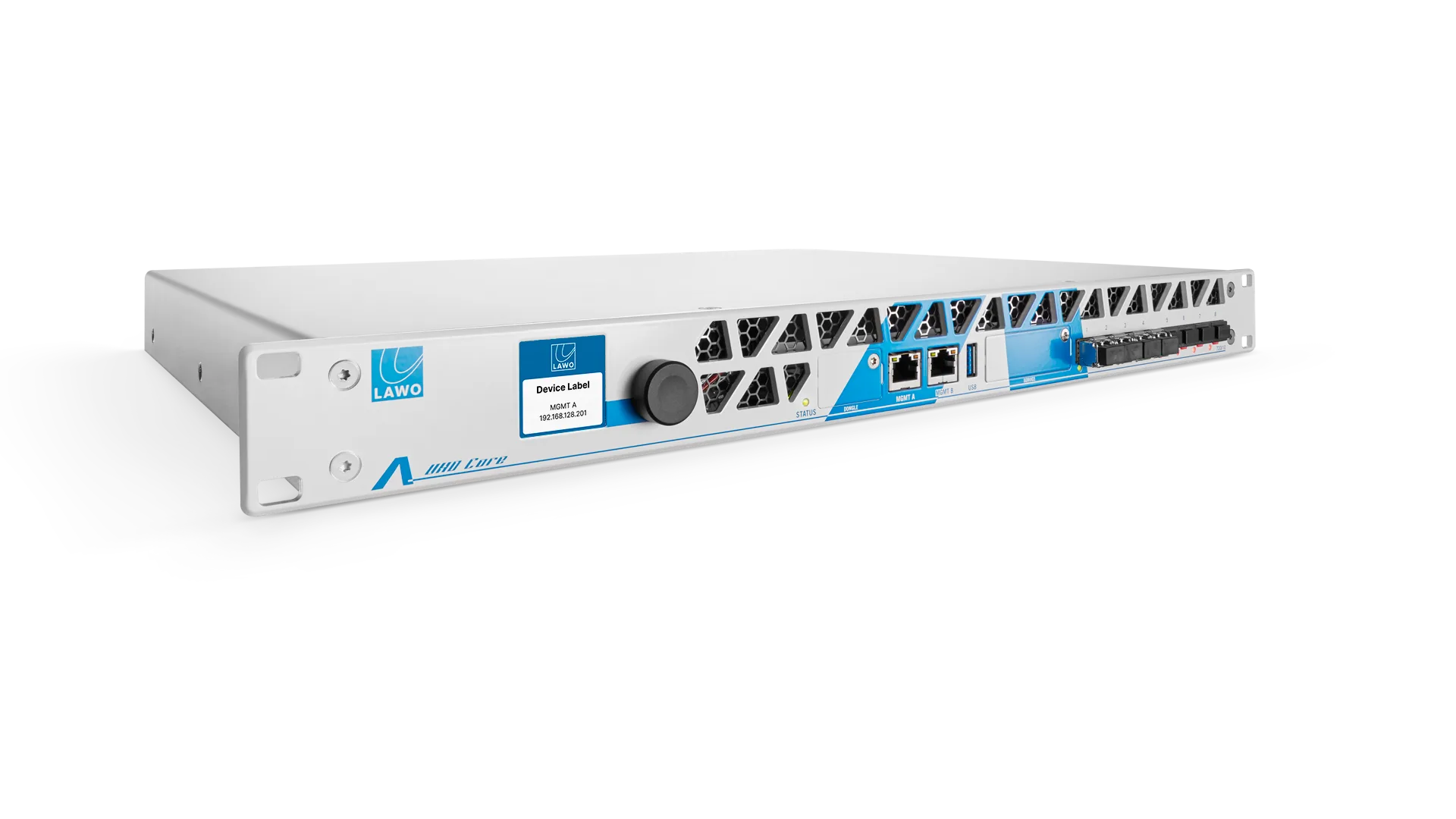
A__UHD Core
A high-density, software-based audio processing engine delivering up to 384 DSP channels with full ST 2110, AES67, and RAVENNA support for the most demanding live productions.
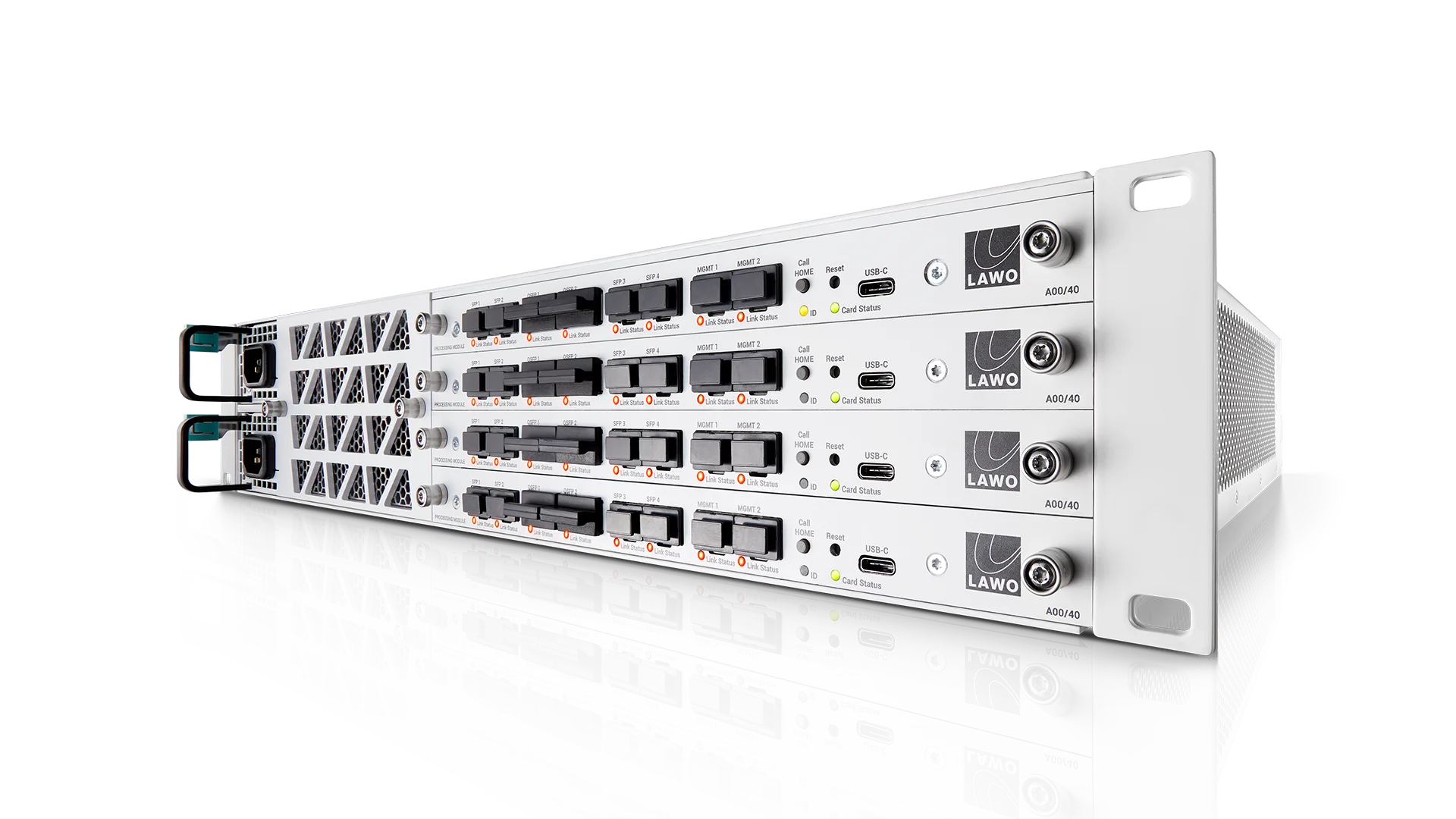
.edge
A hyper-density SDI/IP conversion and routing platform combining hardware and software-licensable functionality for maximum flexibility in mobile environments.
FAQ: OB Trucks & Mobile Production
What are the most critical technical considerations when designing a new OB truck?
Every new OB truck build begins with production scope — the types and sizes of events it will cover define everything else: channel count, processing headroom, physical footprint, weight distribution, power consumption, and cooling. Beyond those fundamentals, today’s builds must also address UHD/HDR capability, immersive audio readiness, IP connectivity, and remote production enablement from day one — requirements that have compounded significantly without eliminating any of the traditional constraints.
How does IP infrastructure change the design of a modern OB truck?
IP-native infrastructure replaces fixed, point-to-point SDI signal chains with software-based routing over standard Ethernet — enabling many-to-many signal distribution, real-time workflow reconfiguration, and significantly reduced cabling weight and complexity. This directly impacts truck design: less physical infrastructure means more usable space, lower weight, and greater flexibility to adapt the truck between different production types.
How do we balance processing power with physical footprint and weight constraints in a new build?
Space and weight are among the most demanding constraints in any OB truck build. Software-based processing on compact hardware delivers significantly more DSP capability per rack unit than legacy dedicated hardware — allowing truck builders to maximize production power without exceeding physical or regulatory weight limits. The result is more capability in a smaller, lighter footprint.
How does IP-based infrastructure enable remote and at-home production from an OB truck?
IP-native OB truck architecture decouples processing from control — DSP engines remain at the venue while console surfaces, routing panels, and monitoring tools can be operated from a remote production center over standard network links. This enables a new class of hybrid truck design: a compact, intelligent remote control unit with a redundant IP link to a central hub where the production processing happens.
How do we future-proof an OB truck build against the pace of format change?
Building on open-standards IP infrastructure — ST 2110, AES67, NMOS — ensures the truck remains interoperable with new equipment and production formats as they emerge. Software-based architecture means new capabilities, from immersive audio formats to cloud-connected workflows, can be added through licence activations rather than hardware replacements — protecting the capital investment of the build for years to come.
How do we ensure broadcast-grade reliability and redundancy in a fully IP OB truck?
Redundancy in an IP-native truck must be engineered at every layer: dual redundant network paths, failover processing engines, and automatic switching that operates without operator intervention. Optional ST 2022-7 Seamless Protection Switching enables simultaneous dual-redundant network links when activated, ensuring that no single point of failure can interrupt a live broadcast — regardless of the complexity of the production.
What does immersive audio readiness mean for a new OB truck build?
Immersive audio — Dolby Atmos, object-based mixing — is now a standard design consideration for new OB trucks, particularly for sports and entertainment productions. The audio infrastructure needs to support the full immersive signal chain natively, from console to encoder, without requiring separate hardware or parallel signal paths. Increasingly, this also means the ability to deliver simultaneous stereo, 5.1, and Atmos mixes from the same truck.
How do we manage multi-truck productions and truck-to-facility connectivity?
For the largest events, two or more trucks need to operate as a single, unified production facility — sharing sources, routing signals, and managing workflows across independent IP infrastructures. Broadcast control systems that support network bridging between IP installations allow truck-to-truck and truck-to-facility connections to be managed from a single, unified control layer, without complex custom integration between systems.
Zugehörige Lösungen
Stadium & Venue