

Environment
Responsibility for the Environment
We think and act holistically. This fundamental Lawo principle is also at the center of our product and service solutions and is likewise taken into account in all environmental topics identified as material – be it climate protection, energy consumption, or the aspects of the circular economy related to our resource consumption.
As part of our business activities, we attach great importance to the implementation of demanding quality standards, which must also lead to environmentally friendly solutions and ecologically sustainable business from a holistic perspective.
That is why a sustainable product strategy and the reduction of Lawo’s ecological footprint are equally important to us and our employees.
We are firmly convinced that customer utility and ecological sustainability combine the same demands for efficiency and flexibility.
With our solutions, we have precisely these requirements in mind: Maximum efficiency in the use of materials, energy, and labor as well as flexibility in order to achieve optimum results at all times with minimal costs or environmental impact – this applies to our production as well as to the use of our products by our customers.
For us, however, ecologically sustainable action also means future security: Our business activities and our products and services for the market take into account current and future ecological requirements as well as meaningful technological developments.
The result: Durable and resource-saving solutions for sustainability-oriented applications. This also applies in-house to the efficiency of production and other processes. We have deliberately refrained from relocating parts of our production abroad, where environmental standards are often significantly lower than within the EU. In this way, we avoid environmental damage and unnecessary transportation.
Our Environmental Guidelines
We know how important ecological aspects are and have incorporated environmental policy issues into our strategic discourse and developed environmental guidelines.
With the regulations contained therein, we address relevant aspects of our business activities and thus ensure that our products not only have a long service life and options for flexible, efficient use.
Volume and weight reductions also help to save resources, and the substitution of materials with more environmentally friendly variants reinforces this effect.
The environmental guidelines are supplemented by regulations on climate protection measures and the necessary adaptation to climate change, as well as by specific requirements for other material environmental aspects of our business activities in the context of packaging use and with regard to circular economy aspects.
To reflect the importance of our commitment to the environment, responsibility for this lies with executive management, which is supported by our Sustainability Manager in the implementation of these important tasks. By starting to involve all managers with relevant areas of responsibility as well as all employees, we are ensuring that our environmental protection efforts are incorporated into all areas of the company.
Material Topics and Important Goals
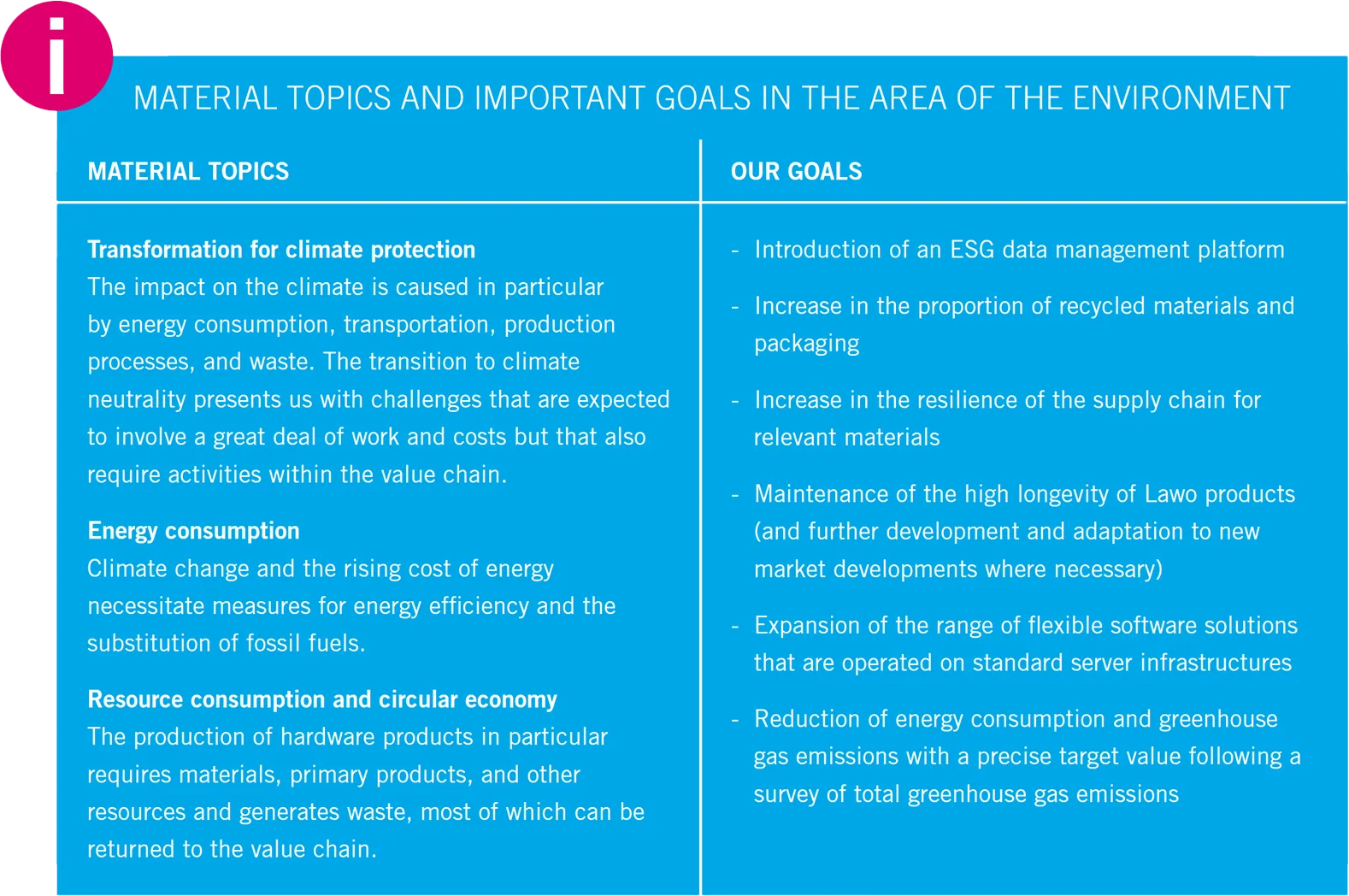
The identified environmental impacts arise not only from our own economic activities, but also to a considerable extent within the upstream and downstream value chain.
In some cases, we have only limited influence on this, but we are aware of our growing responsibility.
We can influence the impact that we cause outside our own production site to some extent through conscious decisions, e.g. when commissioning suppliers or service providers, as well as in the context of product development.
These aspects are also taken into account in the further development of our sustainability Management.
Our most important drivers for environmental protection are quality, innovation, and efficiency: Quality conserves resources: Long product lifetimes avoid additional, recurring resource consumption, as Lawo products only need to be replaced after many years. By developing and offering innovative solutions, we can significantly reduce the consumption of materials and electricity for some products, and minimize the impact on the climate. The efficiency of our products is constantly being improved, meaning that the use of resources and energy during application is also significantly reduced.
Phillip Myers, Chief Technology Officer (CTO)
Use and Outflow of Resources
Promotion of the Circular Economy
Our awareness of resource consumption is reflected in the Lawo environmental guidelines: Through our consumption of raw materials – especially in the area of electronics (parts and components) – we share responsibility for the primary extraction of resources from nature.
We try to meet this responsibility with different approaches. Based on a comprehensive analysis of our processes and the value chain, we have developed regulations, targets, and measures to promote an environmentally friendly and resource-conscious circular economy. As part of a detailed materiality analysis on resource consumption, we were able to identify the circular economy aspects that help us to use the raw materials we need more consciously without having to compromise on product quality.
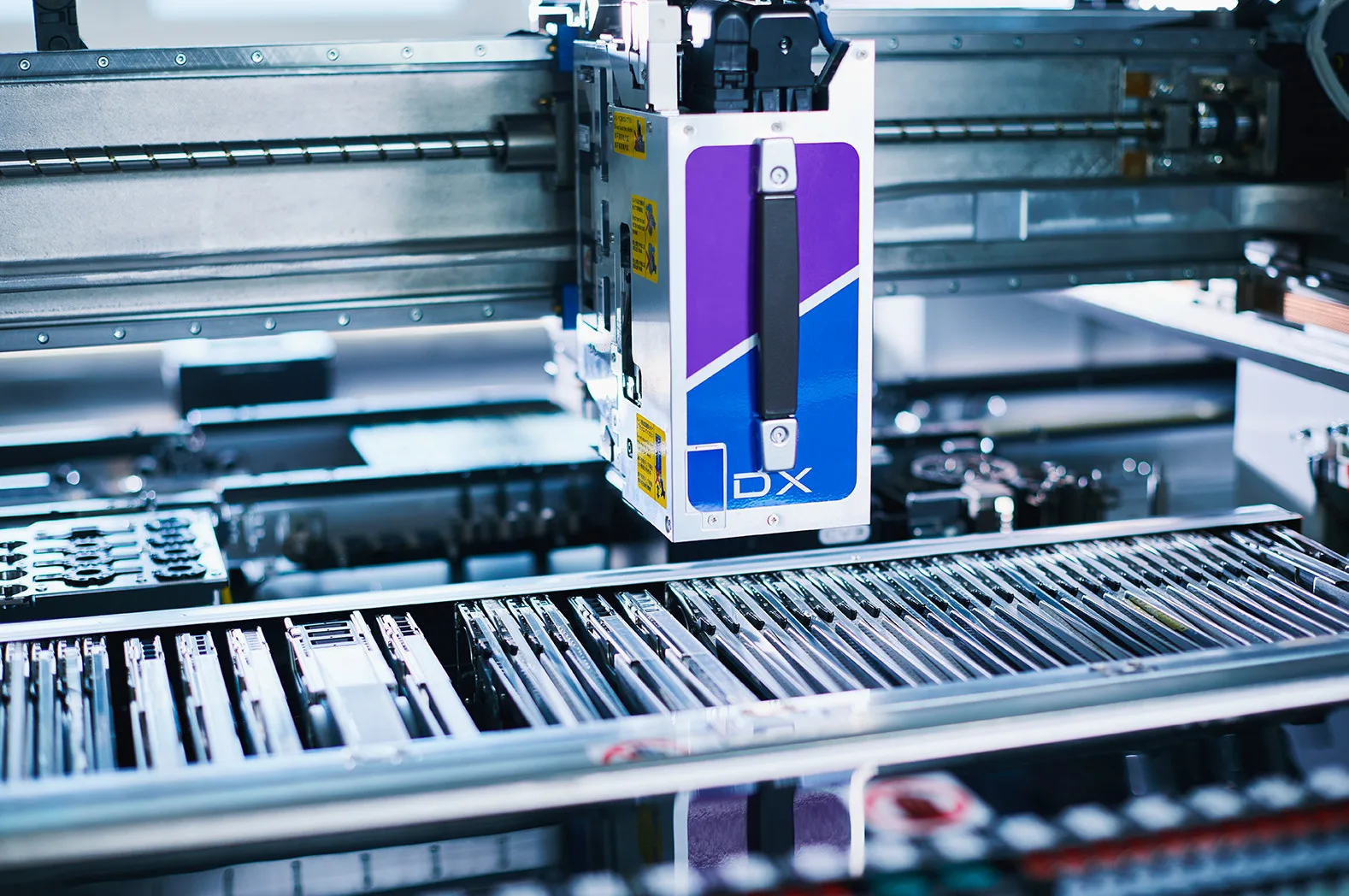
For the production of hardware products in particular, Lawo requires materials, primary products, and other resources and generates waste, most of which can be returned to the value chain. We can positively influence this consumption of resources by scrutinizing all material procurement processes to determine whether the use of primary resources is necessary. The consistent reduction in volume and weight that has been practiced for years in new hardware developments also has a positive impact on resource efficiency.
Maintaining the Value of the Resources Used
We only evaluate our resource consumption once we have also developed an understanding of what happens to the resources we use. This is because the way in which raw materials are used can lead to different ecological assessments of the outflow of resources, which we always keep in mind.
From an environmental and resource protection perspective, it makes a big difference what happens to the resources that leave our company: Are they incorporated into high-quality products for a long time in order to contribute to value creation and the long-term use of resources or do they end up in the garbage after a short period of use or – even worse – as hazardous waste in the environment?
We can give very positive answers to these questions with regard to our processes and products. This is because the hardware that we sell is designed to be highly durable and repairable.
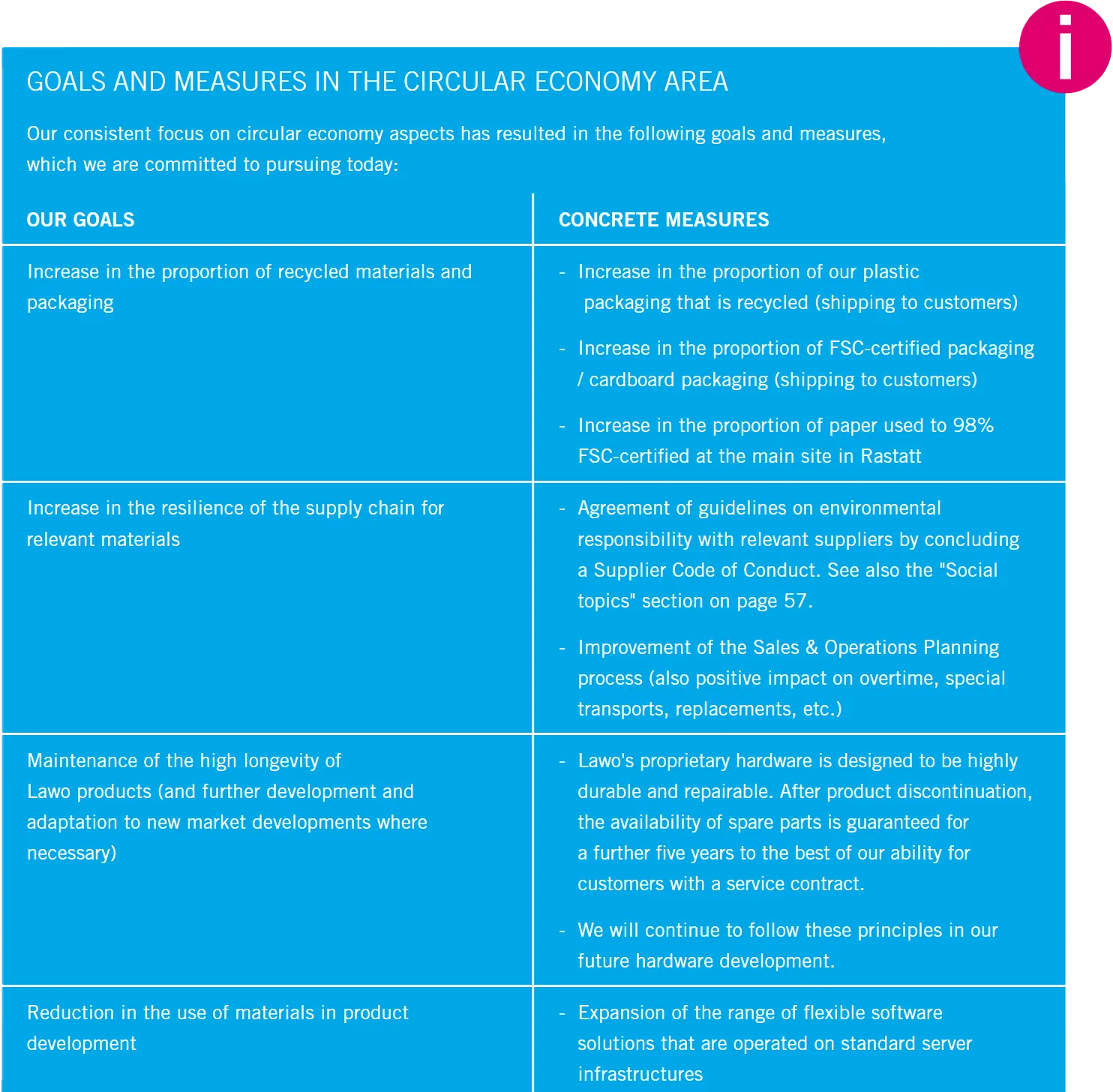
Even if the production of certain products is discontinued, we will ensure the availability of spare parts for customers with a service contract for a further five years. In this way, we help to ensure that resources are used for a long time and are only recycled at a late stage. We will continue to follow these principles in future hardware development.
We also promote resource conservation by constantly expanding the functional scope of our HOME apps software product group. These software solutions are designed so that they can be operated on standard servers independently of hardware developed by Lawo. The advantage for our customers lies in the flexible use of the HOME apps: They are only activated when required, which means that the available computing power can be used much more efficiently. The option of getting access to various HOME apps as part of a subscription makes use even more flexible. Standard servers can also be used for other software applications – not just for solutions developed by Lawo. In this way, our customers minimize the procurement and use of resource-intensive infrastructure, which leads to cost and material savings.
Our Guidelines on the Use of Resources and the Circular Economy
In order to take account of our responsibility with regard to the environmental impact of our resource consumption, we have implemented strategies and regulations that help to ensure that the use of primary resources is gradually avoided or reduced and that we instead
- make greater use of secondary resources,
- use alternative/renewable resources wherever possible,
- and continue to work on making our product Portfolio sustainable. Most of our solutions are designed for a long service life, which is maximized by the long-term availability of relevant spare parts.
To this end, we also work with our suppliers to obtain better information on the origin of resources and to target a higher recycling rate.
In future, this aspect will also be taken into account for the relevant suppliers in the provisions of our Supplier Code of Conduct. Together with our suppliers, we are thus able to increase the proportion of recycled and renewable materials in our product packaging.
We also look at resource efficiency, resource consumption, and the increased use of secondary and renewable resources in product development, where possible.
In addition, we consider risks with regard to stable resource availability, which we regularly analyze as part of our Risk management to ensure that we can react immediately if necessary. At the highest level, executive management is responsible for resource management and taking the results into account.
GRI Key Figures

Energy Management and Climate Protection
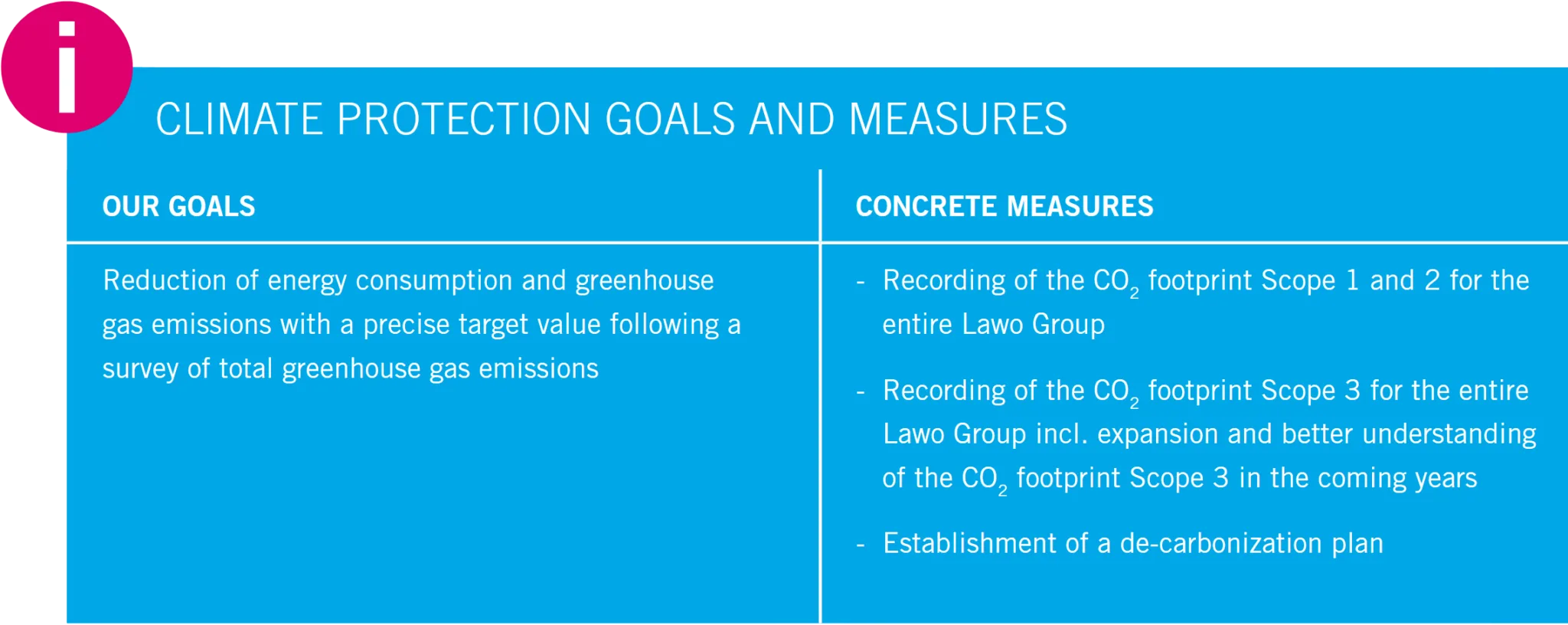
Energy management and climate protection are not new territory for us, but we are aware that – like most other companies – we need to increase our commitment in this Area in order to meet future requirements.
We carried out our first energy and greenhouse gas audits in 2019. To date, we have been able to gather extensive experience in this area, which we are now incorporating into a more in-depth analysis.
Greenhouse Gas Auditioning and Transformation for Climate Protection
We have been monitoring and analyzing our direct greenhouse gas emissions (Scope 1) and the climate impact caused by our electricity consumption (Scope 2) for our production site since 2023, retrospectively up to 2019. From the 2025 financial year, the focus will also shift to emissions from the upstream and downstream value chain (Scope 3).
The aim is to gain a better understanding of our contribution to climate change. We ourselves, but also our customers, want to successfully move toward de-carbonization. We therefore see our greenhouse gas footprint as a basis and important status analysis, which we will continue to develop over the coming months and gradually supplement with the important aspects of the value chain, i.e. Scope 3 emissions.

For us, the greenhouse gas footprint is only a first step and the starting point for future improvements. We will also analyze the effects of climate change and Lawo’s climate resilience as part of the development of our transformation plan. To this end, we will identify the direct and indirect financial impact of climate change on our business models and supply chains and evaluate the climate-related risks (e. g. regulatory changes, CO2 pricing, physical risks). A clear orientation regarding the content of the transformation plan will emerge in coordination with our market partners.
The most important core elements of our transformation plan will be the regular status analysis, taking into account all impacts, risks, and opportunities, the strategic achievement of climate neutrality, and a reduction in greenhouse gas emissions based on our guidelines for climate protection and adaptation to climate change. Where necessary, we will take measures to minimize risks. Opportunities arising from climate-related innovations and efficiency measures are also part of the analysis.
Energy Consumption and Management
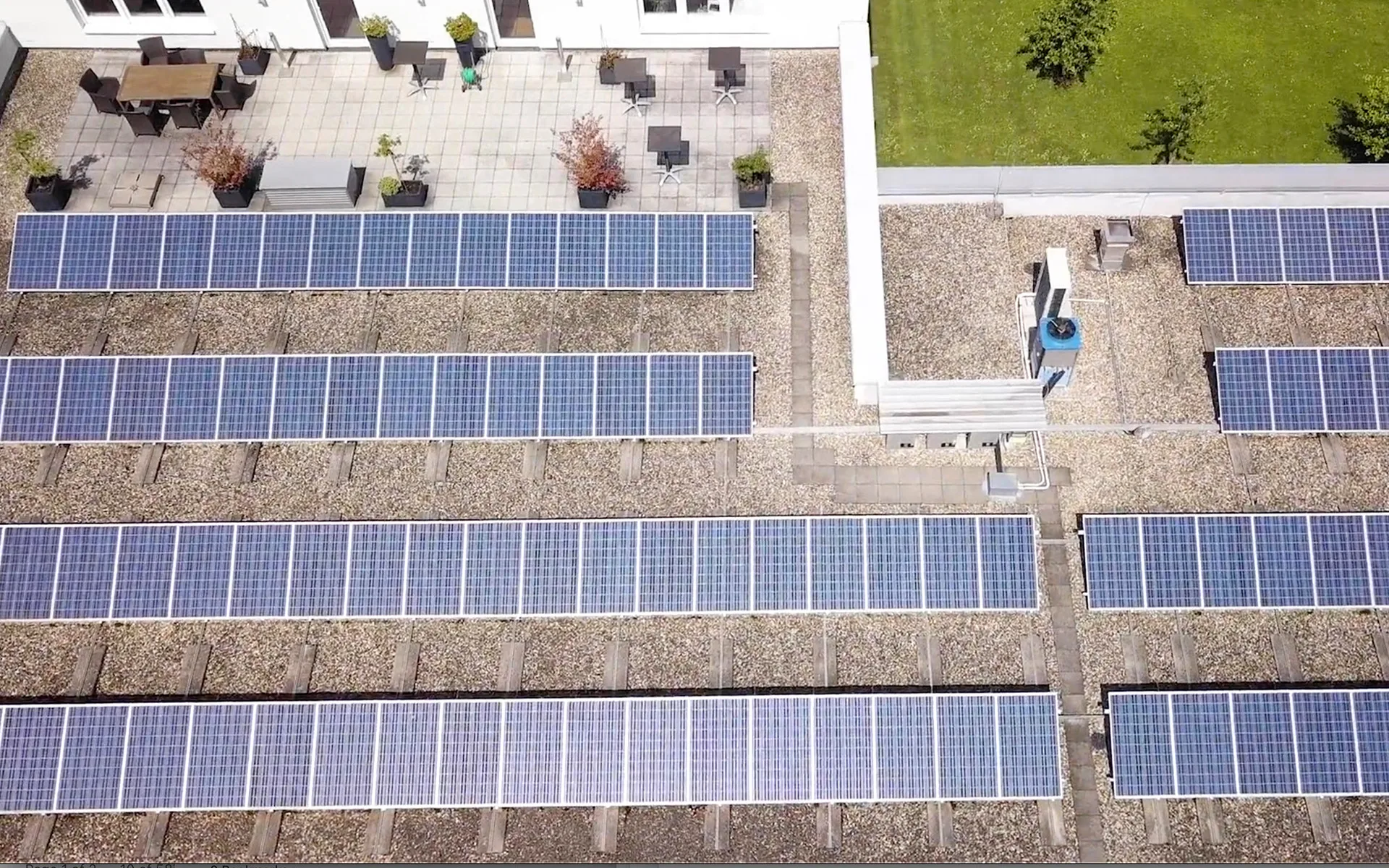
We gained clarity about our energy consumption and possible improvements at our production site in Rastatt in 2021 with an initial energy audit in accordance with DIN EN 16247-1 (audit year 2019). This was followed by a number of measures, including:
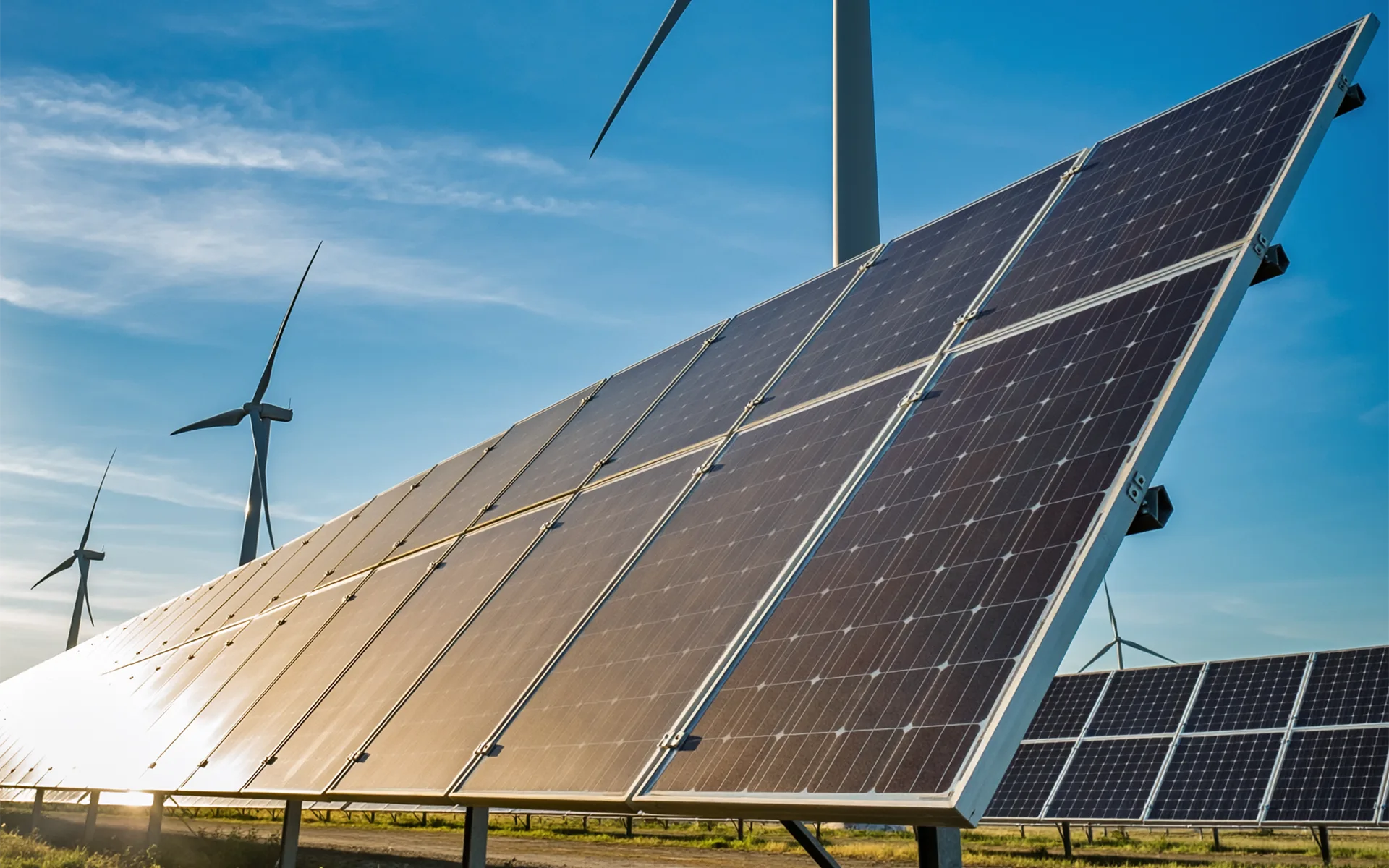
- At our main site in Rastatt, we have switched to CO2 neutral green electricity. Although this has not yet led to a reduction in energy consumption, it has significantly reduced the emission intensity of our energy use. The purchase of green electricity avoids more than 330 metric tons of CO2 per year.
- We regularly remind and inform our employees about the topics of energy consumption and resource conservation. We reduce energy consumption due to travel by offering remote configuration or by increasingly offering training courses for our customers as online events.
- Converting the lighting at our main site in Rastatt to LED has also led to significant reductions in energy consumption.
- We want to repeat the positive experience from the results of the 2019 energy audit in 2025 by means of a new audit (audit year 2023).
GRI Key Figures
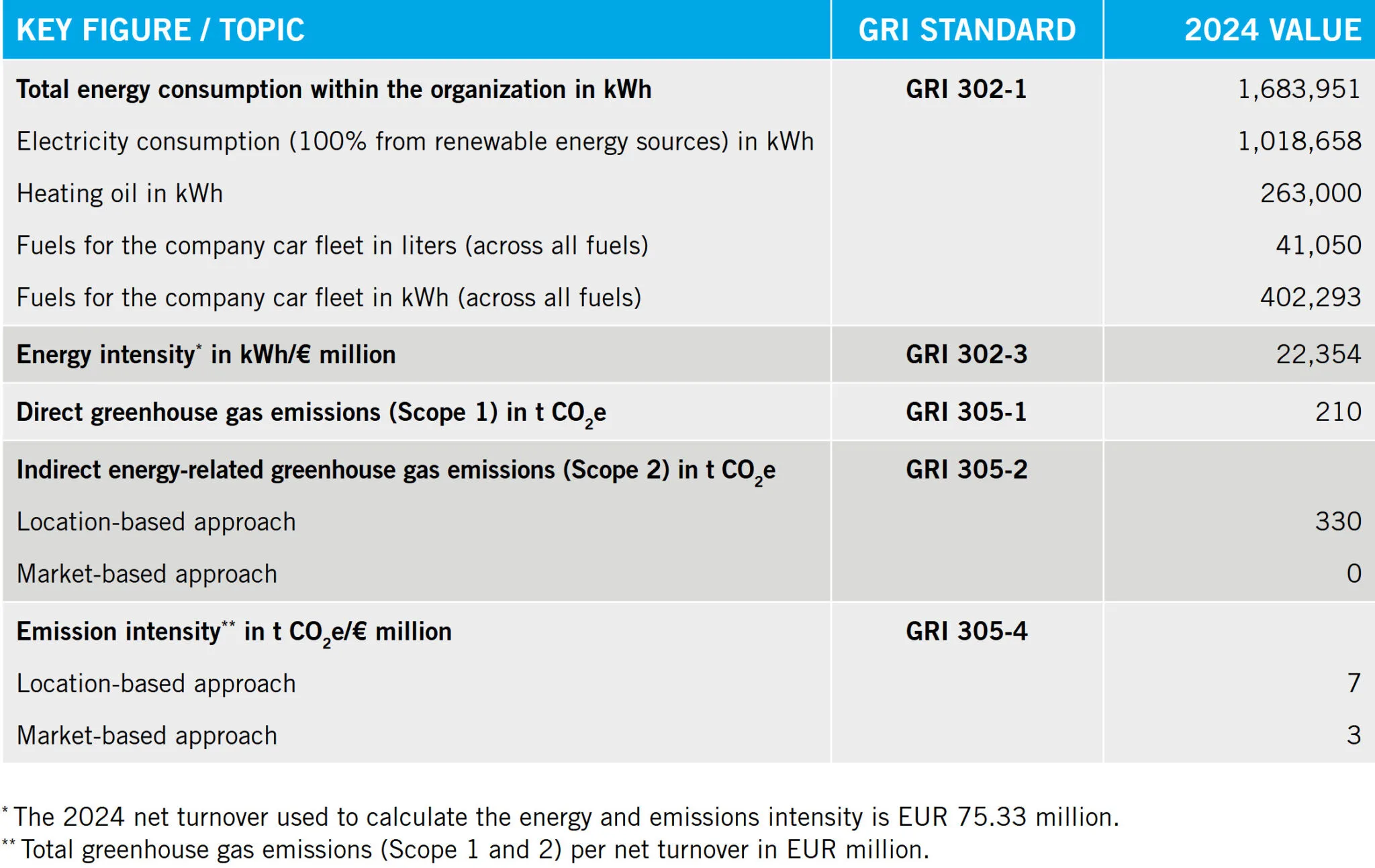
The consumption and greenhouse gas emissions listed in the following table relate exclusively to our production site in Rastatt. At the time of publication of this report, the calculated Scope 1 and Scope 2 emissions of the other Lawo sites for 2024 were not yet available. Our aim is to draw up a complete greenhouse gas footprint for Scope 1 and 2 across all sites in the coming months. We are also planning to gradually expand our footprint to include the relevant aspects of the value chain and to systematically record and Report Scope 3 emissions in future.
Sustainability Report
We have consciously invested in structures, processes, and expertise to firmly embed sustainability within the company and implement it effectively over the long term. Specific goals and measures will help us to continuously develop this process. Our first sustainability report and supporting frameworks reflect this commitment transparently and demonstrates how Lawo takes responsibility — for our customers, our employees, our partners, the environment, and a sustainable future.
How Lawo’s Sustainability Strategy and Management Will Develop
Our Targets for SDG 9, 12 and 13
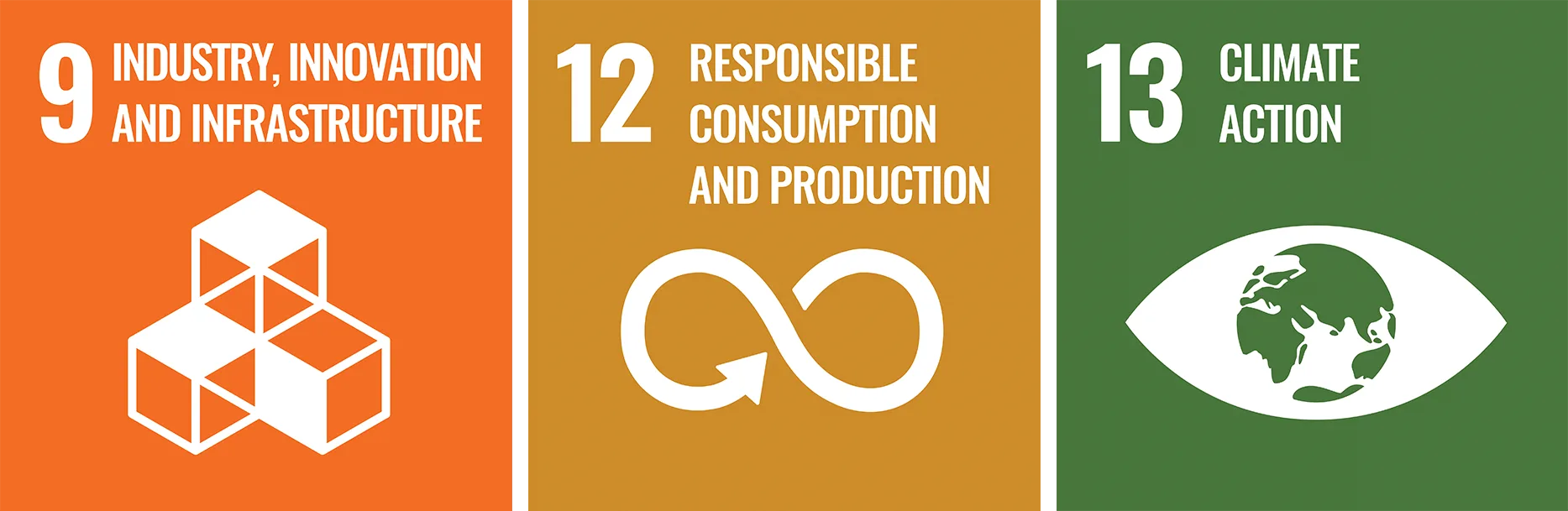
We guarantee the long service life of our Lawo products and ensure that they will continue to meet the demands of the market in future. This includes continuous further development and adaptation to new technological and market related developments. The expansion of our range of flexible software solutions, which are operated on standard server infrastructures, enables us to reduce the use of valuable resources and offer our customers even more efficient and scalable solutions. We also make an active contribution to conserving resources by increasing the proportion of recycled materials and packaging. By increasing the resilience of our supply chain, we ensure security of supply and sustainability. We work closely with our suppliers to promote socially and environmentally responsible practices. Reducing our energy consumption and greenhouse gas emissions is a central aspect of our transformation plan, which is based on a comprehensive survey of our total greenhouse gas emissions. Through this focus, we are contributing toward SDG9, SDG12, and SDG13.
Our Targets for SDG 3, 4 and 8
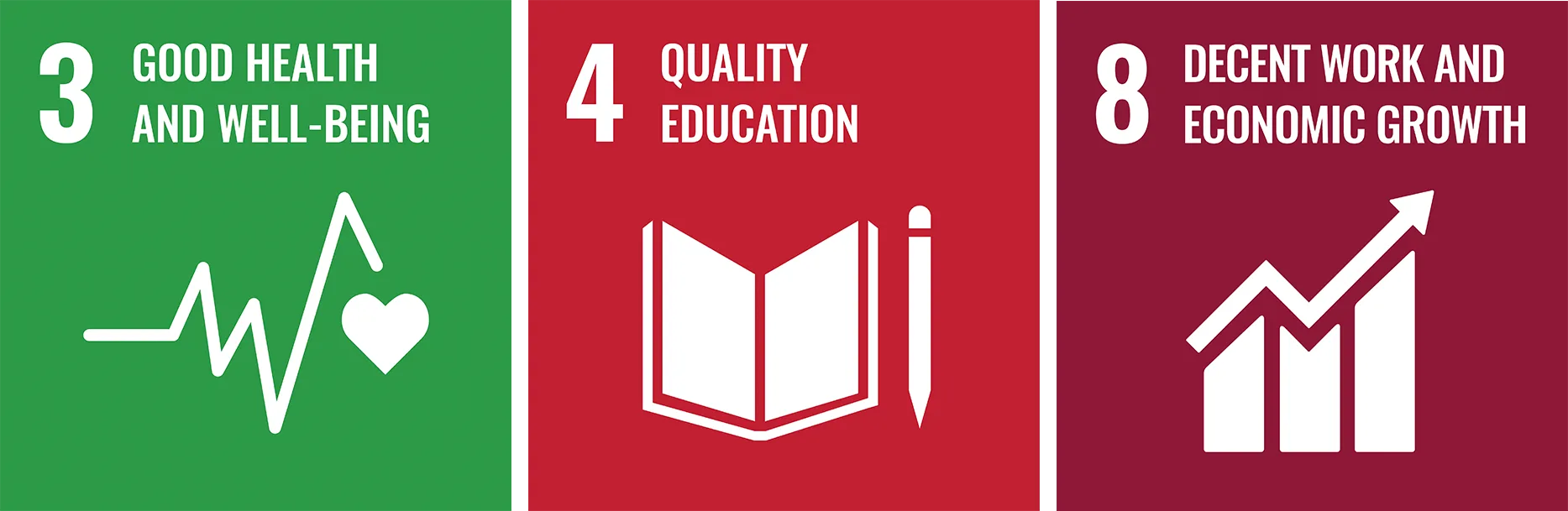
The further development of Lawo as an attractive employer and the creation of sustainable working conditions play a decisive role in our sustainability strategy. We strive to create a positive working environment that promotes the satisfaction, motivation, and health of our employees. We are actively committed to promoting equality and equal opportunities in all areas of the company. Continuous investment in training and further education as well as active knowledge transfer form the basis for sustainable growth and ensure the long-term competitiveness of our company. The successful continuation of our Lawo culture is of particular importance to us. We promote a corporate culture that is characterized by trust, respect, and mutual support. Improving our communication processes and the exchange of information and knowledge is a key measure in this regard. We are thus aligning our company with SDG3, SDG4, and SDG8.
More About Sustainability at Lawo
Sustainability Management
Sustainability is embedded across our value chain—from sourcing materials to delivering broadcast solutions worldwide. We focus on responsible practices, energy efficiency, and durable product design to minimize environmental impact while maximizing value.

Social Responsibility
People are at the foundation of everything we do. We are committed to creating fair, safe, and attractive working conditions that foster trust, diversity, and long-term stability. Through flexible work models, continuous learning opportunities, and a culture of inclusion, we empower our teams to thrive and innovate.
Governance
Strong governance is the foundation of sustainable business at Lawo. We are committed to transparent, ethical leadership and a culture of integrity that respects all stakeholders. By embedding sustainability into our corporate strategy, we ensure long-term value creation and trust.
Contact Us

Have questions about our sustainability initiatives or ESG strategy?
Do you have questions about Lawo’s sustainability intitiatives, ESG strategy or something else?
Get in touch with Juliane Struck, Sustainability Manager at Lawo, for more information and send an email to sustainability@lawo.com.
We’d love to hear from you!