

Sustainability Management
Our Activities – Our Added Value
Lawo offers optimized solutions for the production of television broadcasts, live radio broadcasts, performing arts, and professional corporate AV content. Thanks to its team of experts with advanced technical expertise who are passionately committed to media production at the highest level, coupled with the intuitive operability, agility, and commercial flexibility of its solutions, the company increases customer utility in all application areas. In addition, Lawo’s hardware solutions are characterized by their outstanding durability and ease of repair.
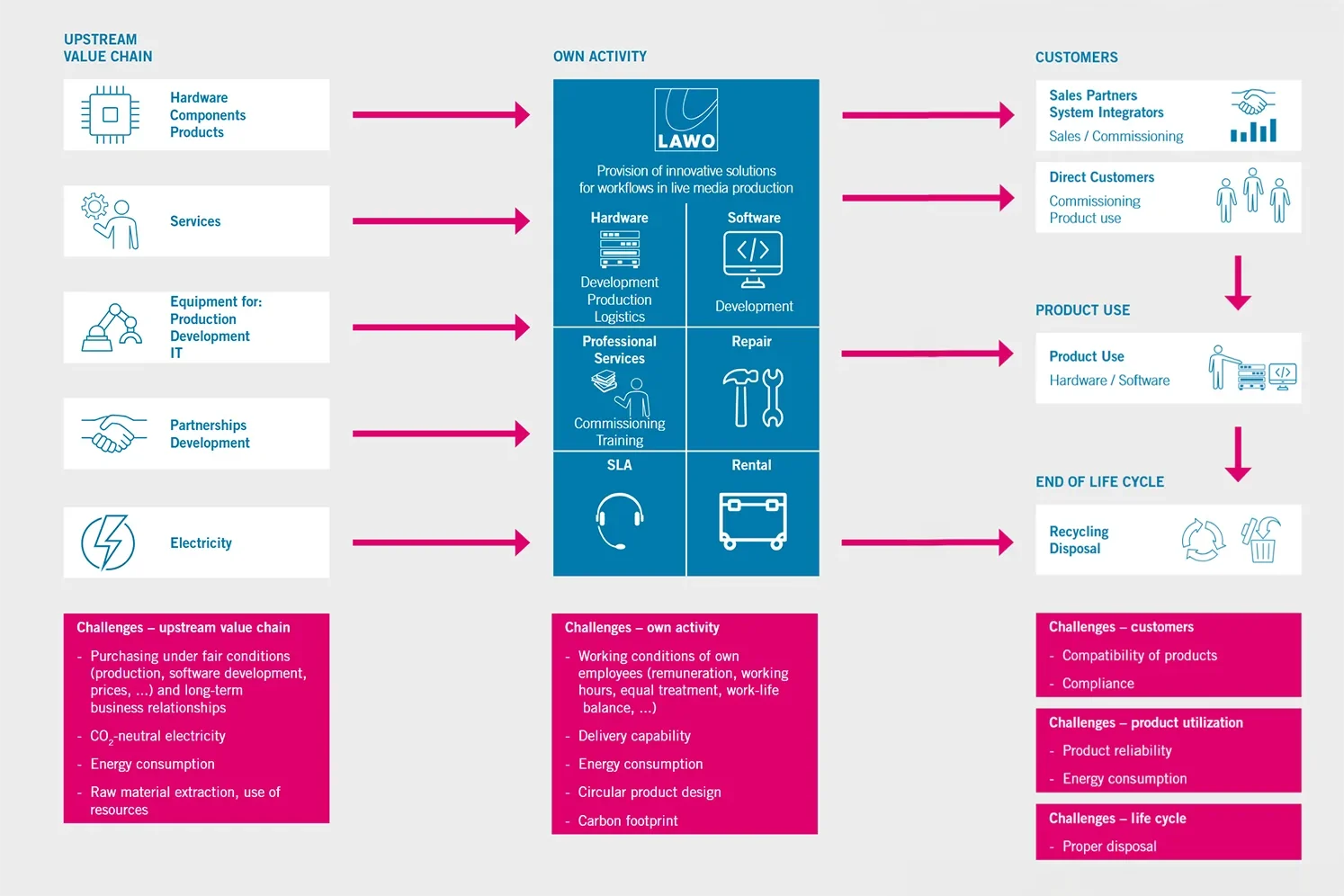
Our company’s value chain comprises all activities and processes required to manufacture and deliver our products and services. This ranges from the procurement of materials to the delivery of finished products to our customers.
Our company plays a central role in this value chain by developing and manufacturing innovative, high-quality solutions and implementing them with our customers. By continuously improving our processes, we contribute to creating added value for everyone involved.
We recognize the importance of sustainability along the entire value chain. We therefore identify and address potential sustainability risks and opportunities in key areas, from procurement to the end use of our products.
Our aim is to make a positive contribution to the environment and society through responsible action and innovative solutions.
Focus on the Entire Life Cycle
We purchase components, finished goods, software, and services from various international suppliers. These suppliers are carefully selected to ensure that they meet our high standards in terms of quality, reliability, and continuity.
Close cooperation with suppliers and the constant testing of procurement markets ensure that these standards are maintained and potential bottlenecks are identified at an early stage. Procurement also includes cooperation with development partners and service providers.
We deal intensively with energy as a resource, e.g. through energy audits and data collection to ascertain our CO2 footprint. Since 2020, we have covered the electricity requirements of our main and production site (Lawo AG) by purchasing electricity from 100% renewable energy sources.
Lawo designs, manufactures, and distributes advanced network, video, audio, control, and monitoring technology for TV and radio broadcasting, opera houses and theaters, stadiums, and corporate applications. The product portfolio includes IP-based media infrastructure solutions, control and monitoring systems, digital audio mixing consoles, and video processors. All products are developed by Lawo’s international R&D team and manufactured to the highest quality standards at our headquarters in Rastatt.
We have our own sales team to market and sell our products worldwide, but we also work with sales partners and system integrators. Our professional media production customers use our products according to specific applications and requirements. We offer comprehensive support and services to ensure that our customers have the best possible experience with our products.
Our Value Chain
Approach
In our commitment to sustainability and when assessing the sustainability impact of our company and the associated activities and processes, we not only look at our own business operations, but also include the key aspects of the upstream and downstream value chain. Accordingly, we also take into account the upstream and downstream value chain in our sustainability reporting, insofar as this is possible based on the data available to us.
We do not have any real data for parts of our value chain, as our influence and contacts do not extend far enough into these areas of the value chain. In such cases, we have used external data that could be referenced for our areas of application, or we have made qualified estimates. If this has taken place, we have indicated this in the report at the relevant point.
Stakeholder Engagement - Ensuring We Know What Needs To Be Done
The perspectives and expectations of our stakeholders have traditionally been a high priority for Lawo. They are not only incorporated into fundamental corporate decisions, but also shape day-to-day business. Treating our relationships with respect is one of Lawo’s core values. Personal relationships based on honesty, trust, and integrity are a key success factor – both within the company and in our dealings with customers and other stakeholders.
The basis of our activities at Lawo is regular dialog with our stakeholders. As part of our commitment to sustainability, we have carried out a stakeholder analysis in accordance with the ESRS (European Sustainability Reporting Standard). The aim of this analysis was to gain a comprehensive understanding of the expectations and perspectives of different stakeholder groups so that these can be consistently taken into account in our sustainability strategies and activities. In the first stakeholder analysis in accordance with the ESRS in 2024, we analyzed, evaluated, and weighted the interests and views of various stakeholder groups in several workshops.
The aim of this process is to systematically record and understand the concerns, expectations, and criticisms of our stakeholders. This enables us to deliberately involve relevant stakeholders in our sustainability strategy and ensure that their interests are adequately taken into account – for the benefit of our stakeholders, for Lawo, and for sustainable development.
With the involvement of internal experts who are in direct or indirect contact with the various stakeholders, discussions were held to determine which sustainability-related topics are relevant to the respective stakeholders and how important they are. In the coming years, we want to further strengthen direct dialog with stakeholder groups.
The stakeholder workshops are held for specific departments and business units – in some cases across all departments – and are moderated by the Sustainability Manager. In the reporting year, support was also provided by external consultants.
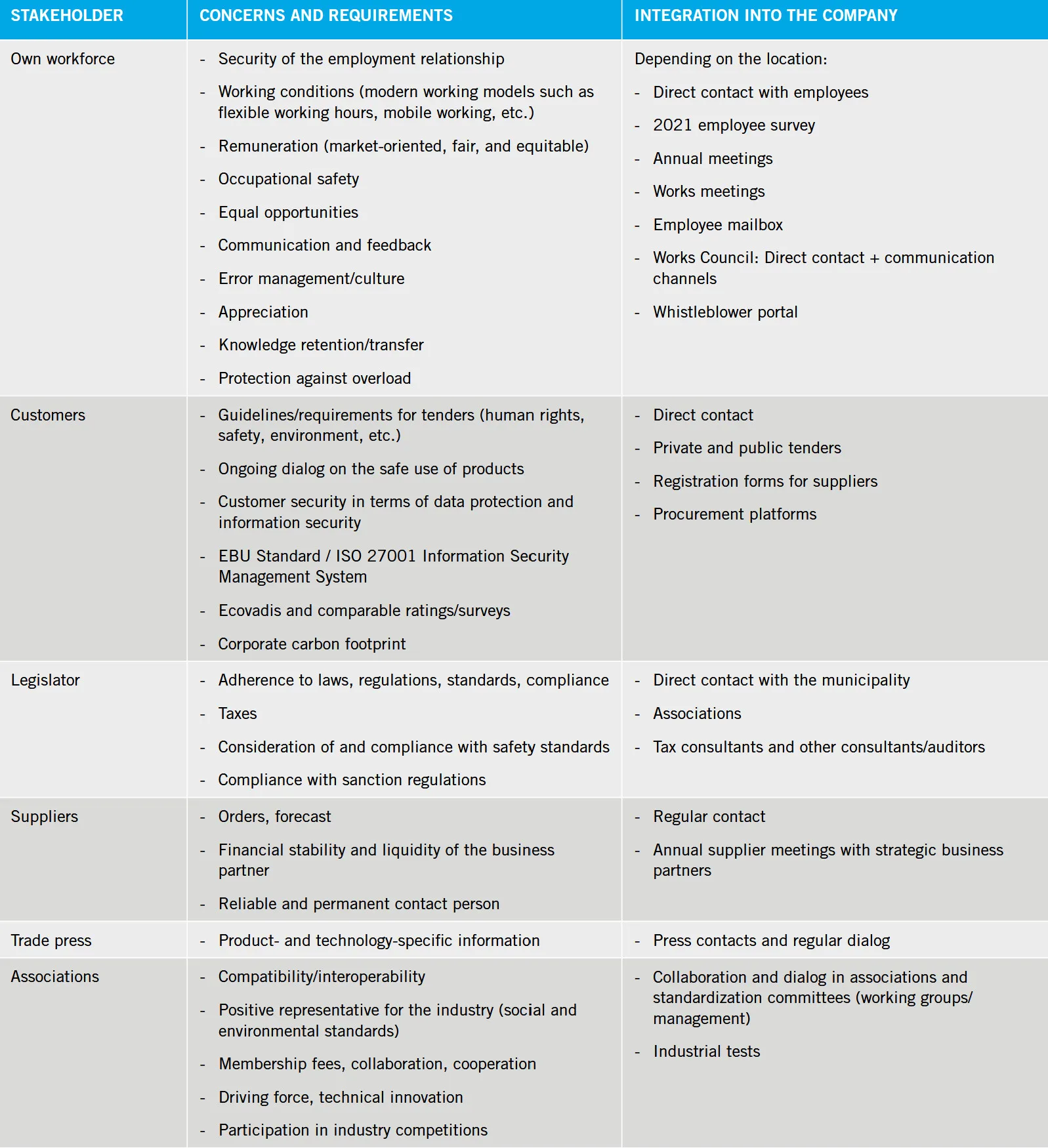
Results of the 2024 Stakeholder Analysis
This overview shows the result of the 2024 stakeholder analysis at Lawo with the key interests and views of the most important stakeholder groups, together with the sources for these findings.
The result of the stakeholder analysis is reported to the „Vorstand“ and the executive management of the affiliated companies and is therefore incorporated into the decision making and strategic planning process.
The Supervisory Board is informed by the „Vorstand“ as part of the presentation of the sustainability report.
Focal Points of Our Commitment to Sustainability
Focus on the Essentials
Prioritizing relevant topics is a key success factor in management. In our sustainability management, we therefore rely on the concept of „double materiality assessment“. We have complied with the requirements of the Global Reporting Initiative (GRI) and the European Sustainability Reporting Standard (ESRS). Our goal: clear recognition of material and essential topics coupled with the targeted implementation of corresponding measures.
Double materiality assessment includes identifying,prioritizing, and focusing on the most important impacts of our company as well as the risks and opportunities for Lawo in terms of sustainability aspects. The aim of this step is to ensure that our commitment to sustainability is aligned with the topics that are most important to us and to our ecological, economic, and social environment.
Methods and assumptions: How we proceeded
We developed our method for identifying and assessing impacts, risks, and opportunities in collaboration with a consulting firm at the beginning of 2024 and applied this method in all parts of the company. This approach is founded on the identification of relevant sustainability topics based on stakeholder interests and the sustainability aspects listed in the ESRS. The topics identified in this way were then subjected to a detailed analysis for each area under consideration, the assessment of which provided information on whether it was a material topic.
The identification, selection, and assessment of sustainability-related impacts, risks, and opportunities was carried out comprehensively for the first time in 2024 – with the involvement of employees with expertise in the respective areas, the Sustainability Manager, and external consultants. Our Chief Financial Officer (CFO) was also involved as a member of the „Vorstand“, together with two members of the Extended Executive Management Team and the Executive Management of other Lawo sites.
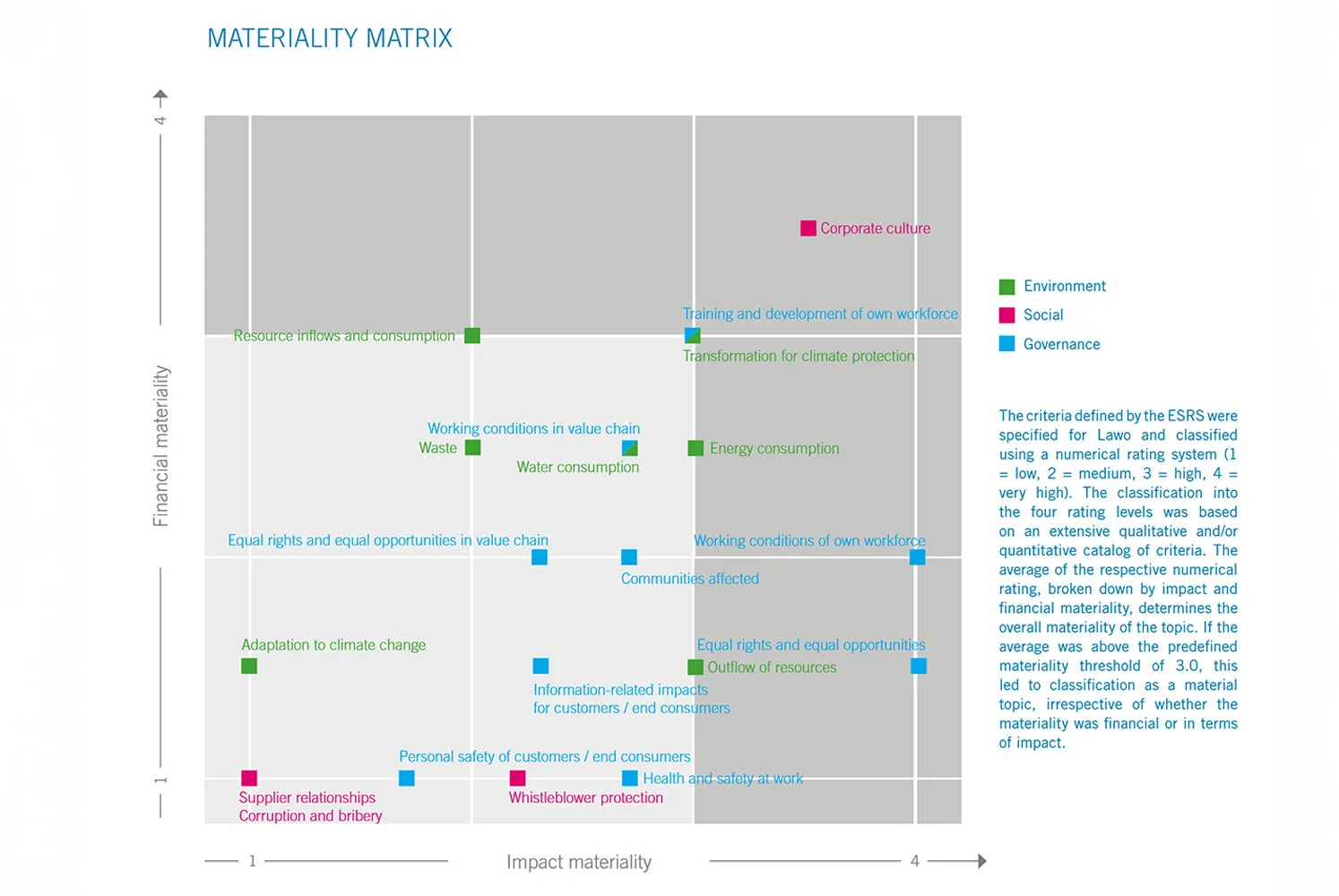
Based on the assessment of the status quo in a sustainability check, the value chain screening, and the stakeholder analysis, we drew up a list of 27 topics, which we have subjected to a detailed analysis in accordance with the principle of double materiality:
- Impact materiality: Impact that Lawo has or may have on the subject matter (positive or negative), assessed in terms of scale, scope, irreversibility, and, where appropriate, likelihood; and
- Financial materiality: Financial risks and opportunities that the topic entails or could entail for our company, assessed according to their impact on financial performance and probability of occurrence.
Our Understanding of Material Impacts, Risks and Opportunities (IROs)
Material sustainability-related impacts
The impact that Lawo has or could have on the environment and/or people through its activities or business relationships, including the impact on their human rights. The impact may be actual or potential, negative or positive, short-, medium-, or long-term, intended or unintended, and reversible or irreversible. The impact indicates the negative or positive contribution the company makes to sustainable development.
Material sustainability-related risks
Uncertain environmental, social, or governance events or conditions that, if they occur, could potentially have an adverse material impact on Lawo’s business model or strategy, as well as our ability to achieve our goals and create value, and that could therefore influence our decisions and those of our business relationships with respect to sustainability topics.
Material sustainability-related opportunities
Uncertain environmental, social, or governance events or conditions that, if they occur, could potentially have a positive material impact on Lawo’s business model or strategy, as well as our ability to achieve our goals and create value, and that could therefore influence our decisions and those of our business partners with respect to sustainability topics.
Results of the 2024 Materiality Assessment
In the overview, we have presented the material sustainability topics for Lawo together with their associated impacts, risks, and opportunities.
Positive impacts and opportunities are marked in green, while negative impacts and risks are marked in orange.
The impacts, risks, and opportunities that led to the assessment of the sustainability topic as material are highlighted in blue.
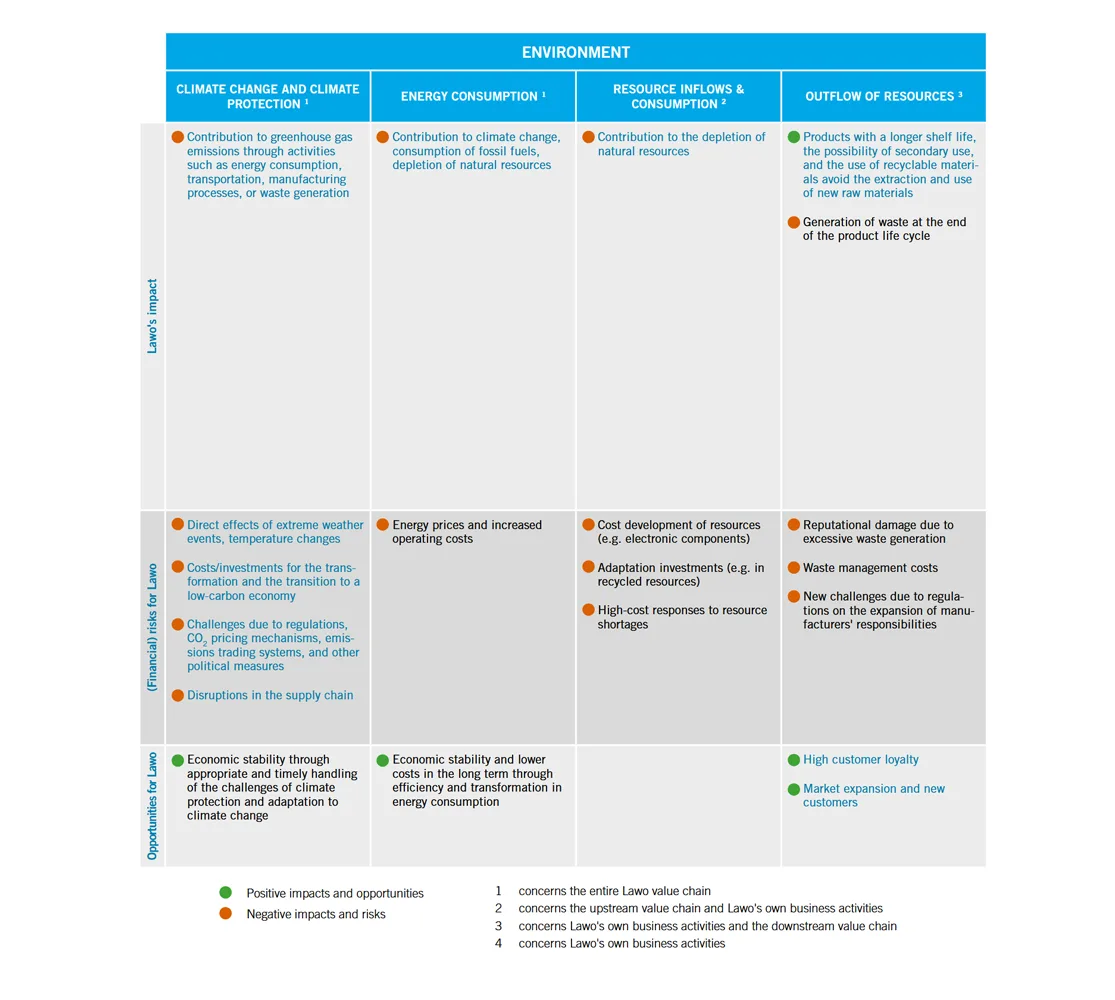
How We Deal with Our Material Topics
We have developed regulations and strategies, targets, and measures for the topics identified as material. We will go into this in more detail in the following sections.
In future, we will review and update this analysis and evaluation annually and report the results to the decision-making and supervisory bodies at Lawo.
This ensures that the respective view of sustainability aspects and their relevance for business activities is available to those responsible at all times and can be taken into account.

Sustainability Management
Sustainability is not a result, but an ongoing process. It requires sustainability management with committed managers and employees throughout the company.
Lawo is committed to complying with internationally recognized standards such as the UN Guiding Principles on Business and Human Rights and the legal regulations in the countries in which we do business. However, we see sustainability as more than just a legal requirement; it is an opportunity for the long-term success of our company.
The responsibility of the "Vorstand" and Supervisory Board
Responsibility for the appropriate consideration of sustainability-related impacts, risks, and opportunities lies with the „Vorstand“. Lawo’s Chief Financial Officer (CFO) is responsible for monitoring impacts, risks, and opportunities.
The sustainability-related tasks of the „Vorstand“ focus on the following key areas:
- Specification of strategic guidelines for the sustainable alignment of the Group and the business units Definition of overarching strategy projects
- Monitoring and review of the progress of the sustainability strategy
- Ensuring the achievement of sustainability goals
- Consideration of sustainability goals in decisions
- Investment and budget decisions on sustainability projects
- Decision to discontinue sustainability projects, if applicable
The „Vorstand“ uses the reports and recommendations from the Sustainability Team to review the implementation of the defined strategies, targets, and measures for a sustainable corporate direction at least once a year. This also includes an evaluation of the results achieved and, if necessary, an adjustment of the approach and strategic orientation.
The Supervisory Board is informed by the „Vorstand“ through the presentation of the sustainability report and whenever the need arises. The Supervisory Board discusses sustainability-related topics at its meetings whenever the need arises. In addition, risk- and opportunity-related aspects of sustainability are dealt with as part of risk management.
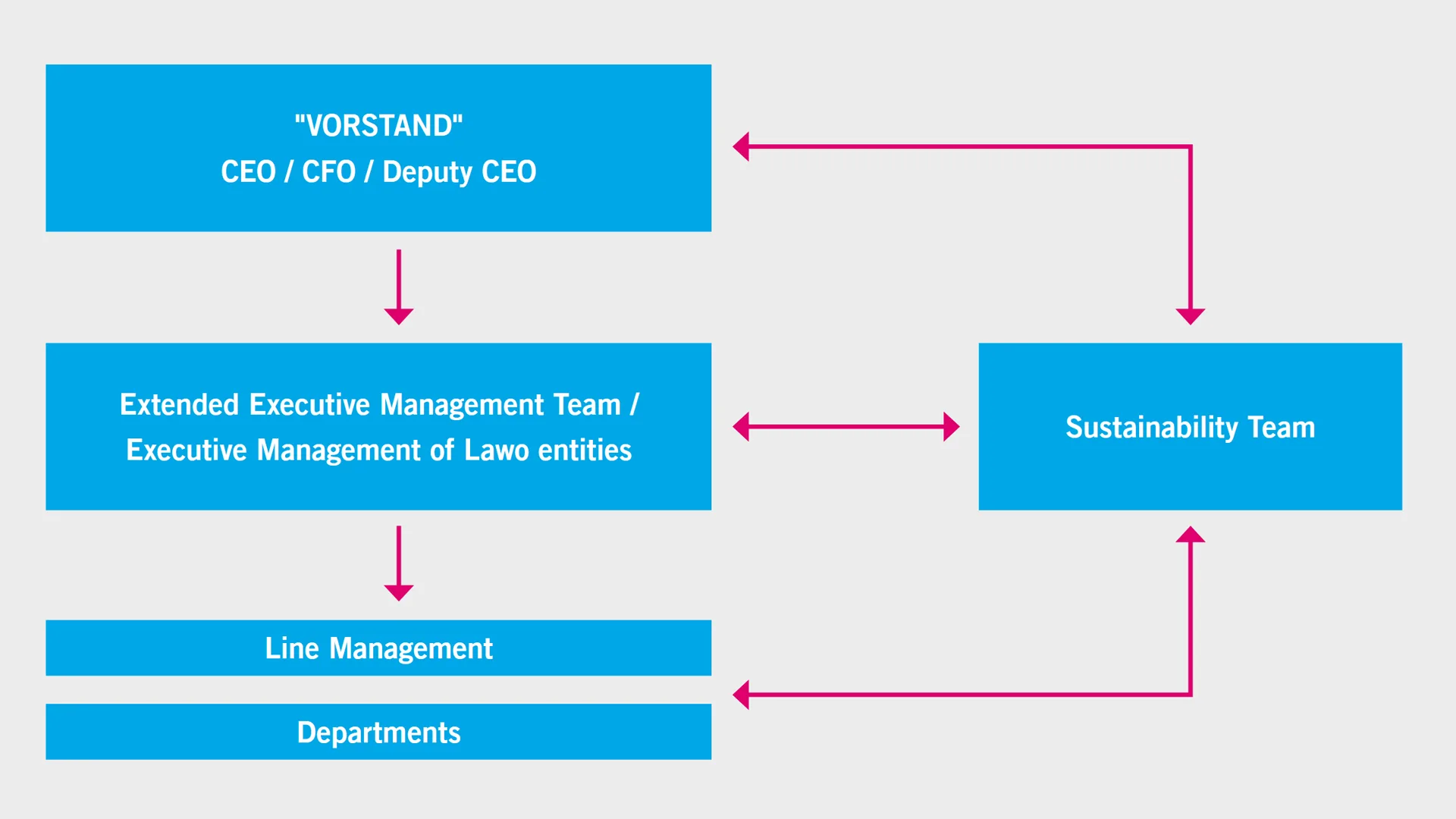
The Sustainability Team is the control center for sustainability at Lawo
The Sustainability Team at Lawo is anchored at Senior management level. It deals with fundamental strategic topics and the focus on sustainability and prepares these for decision-making by the „Vorstand“.
The involvement of decision-makers who are relevant from a sustainability perspective creates a broad consensus and promotes the cross-departmental flow of information.
In addition to the CFO and the Sustainability Manager, the COO and a representative from Strategic Deployment Management are permanent members. The Sustainability Team usually meets on a quarterly basis. These Meetings are prepared and coordinated by the Sustainability Manager. They are officially chaired by the CFO.
Role of the Sustainability Manager
The position of Sustainability Manager was created to coordinate sustainability activities in all of the company’s business units. The tasks of this function are defined in a specific job description. A central component is coordinating the implementation of an annual sustainability check. Identified negative impacts are addressed through specific measures such as the adaptation of processes or the implementation of training courses. The tasks associated with this function also include coordinating and monitoring the regular stakeholder analysis and the materiality assessment.
The Sustainability Manager is also responsible for coordinating and monitoring the implementation of the agreed guidelines, strategies, targets, and measures on material sustainability topics and other aspects. They inform executive management about the results of the individual steps of sustainability management – in particular About identified material impacts, risks, and opportunities – and derive from this specific recommendations for actions to be taken by the company. The Sustainability Manager is also responsible for preparing the content of the sustainability report.
Analysis + Evaluation = Strategy What We Do at Lawo
Lawo pursues a sustainable corporate strategy that integrates ecological, social, and economic aspects. We have developed strategic principles for our material challenges within the context of a responsible corporate policy, but also beyond this. They form the basis and level of ambition of our actions for greater sustainability.
Responsibility toward our employees is a central component of our corporate activities. At Lawo, we are convinced that sustainable success is only possible on the basis of a fair, safe, and respectful working environment.
Our social guidelines have been developed with a view to the needs of all employees, the applicable legal framework in the countries in which we operate, and our corporate culture. They form the basis for effective collaboration and forward-looking HR management.
We are aware of our impact on climate change through our greenhouse gas emissions in our own operations as well as in the upstream and downstream value chain and take our responsibility for a climate-friendly economy seriously.
Our strategies and regulations relating to climate protection, adaptation to climate change, and energy take into account the impact of our company on these aspects and describe how we deal with the risks and opportunities that we have derived in this regard.
Through our consumption of resources – especially in the area of electronics (parts and components) – we share responsibility for the primary extraction of resources from nature. In order to take this responsibility into account, we rely on strategies that help to avoid or reduce the use of primary resources and instead make greater use of secondary resources and more sustainable resources.
Our Strategic Sustainability Focuses
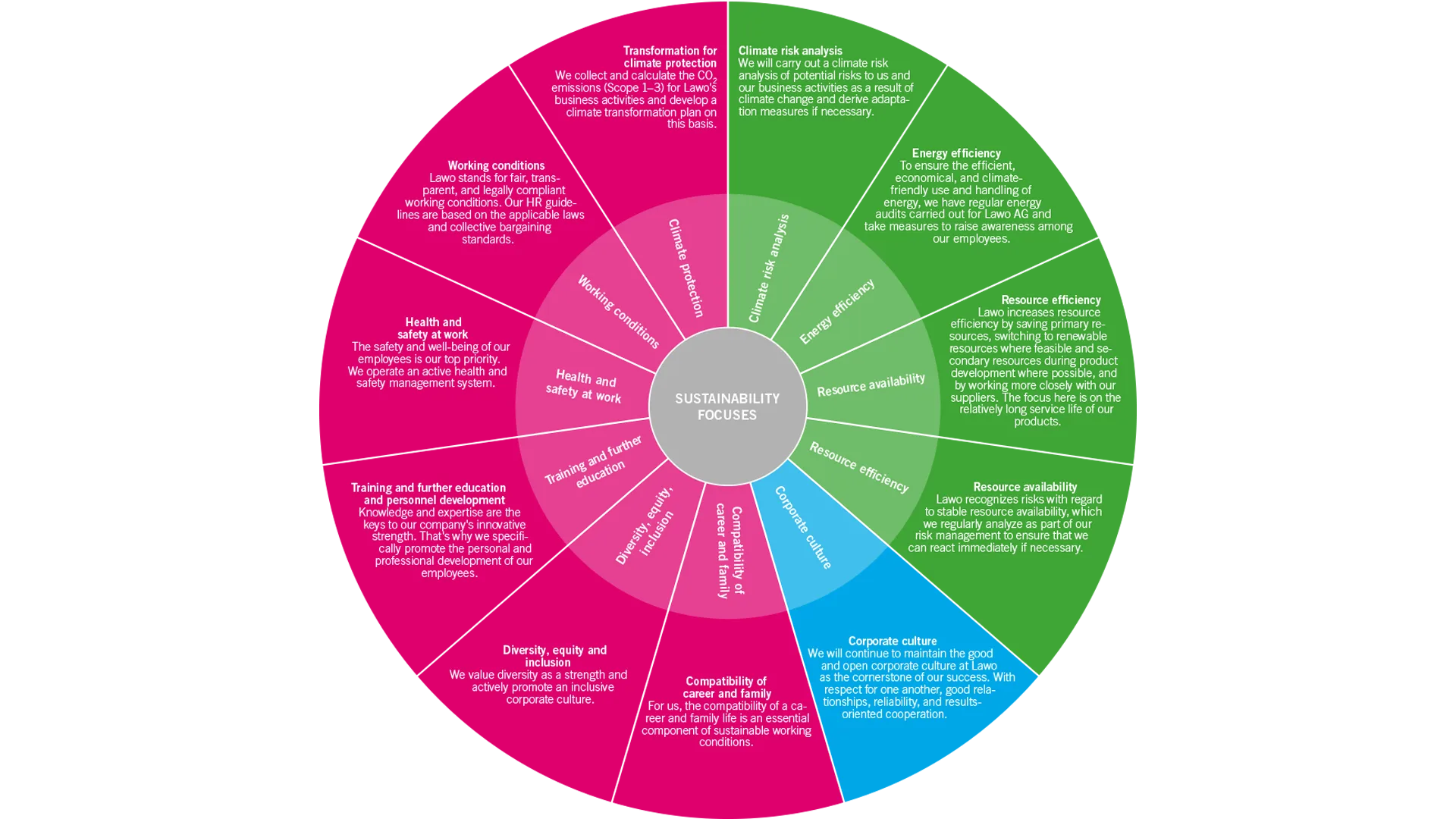
Sustainability Report
We have consciously invested in structures, processes, and expertise to firmly embed sustainability within the company and implement it effectively over the long term. Specific goals and measures will help us to continuously develop this process. Our first sustainability report and supporting frameworks reflect this commitment transparently and demonstrates how Lawo takes responsibility — for our customers, our employees, our partners, the environment, and a sustainable future.
How Lawo’s Sustainability Strategy and Management Will Develop
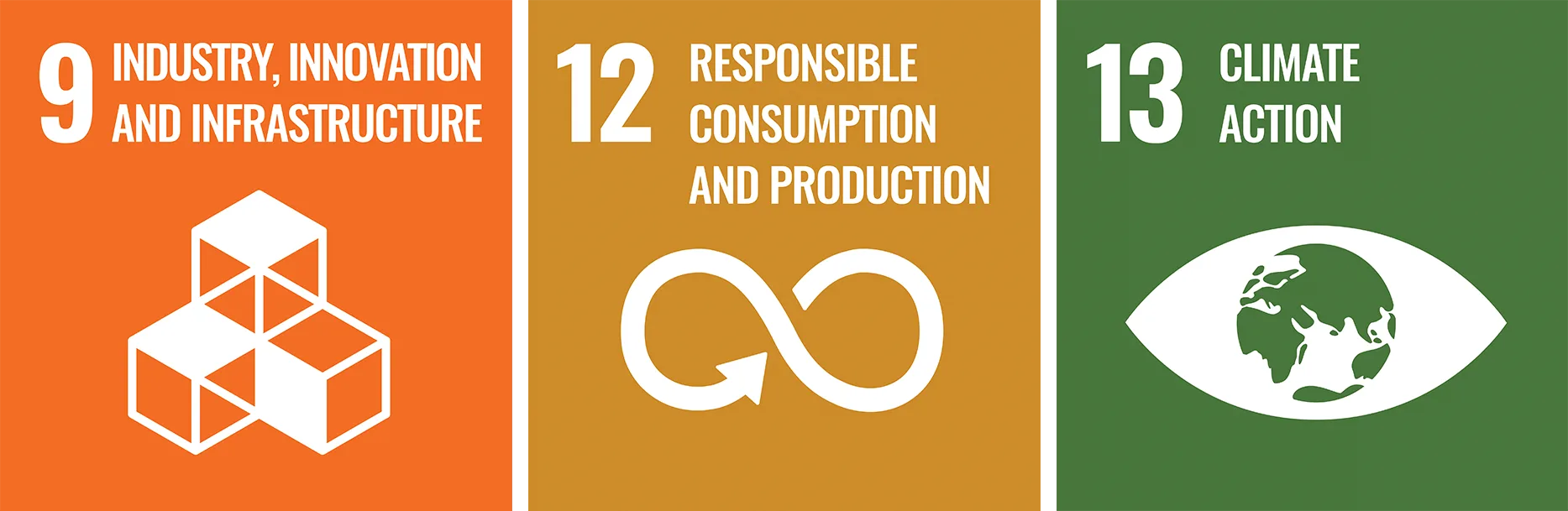
Our Targets for SDG 9, 12 and 13
We guarantee the long service life of our Lawo products and ensure that they will continue to meet the demands of the market in future. This includes continuous further development and adaptation to new technological and market related developments. The expansion of our range of flexible software solutions, which are operated on standard server infrastructures, enables us to reduce the use of valuable resources and offer our customers even more efficient and scalable solutions.
We also make an active contribution to conserving resources by increasing the proportion of recycled materials and packaging. By increasing the resilience of our supply chain, we ensure security of supply and sustainability. We work closely with our suppliers to promote socially and environmentally responsible practices. Reducing our energy consumption and greenhouse gas emissions is a central aspect of our transformation plan, which is based on a comprehensive survey of our total greenhouse gas emissions. Through this focus, we are contributing toward SDG9, SDG12, and SDG13.
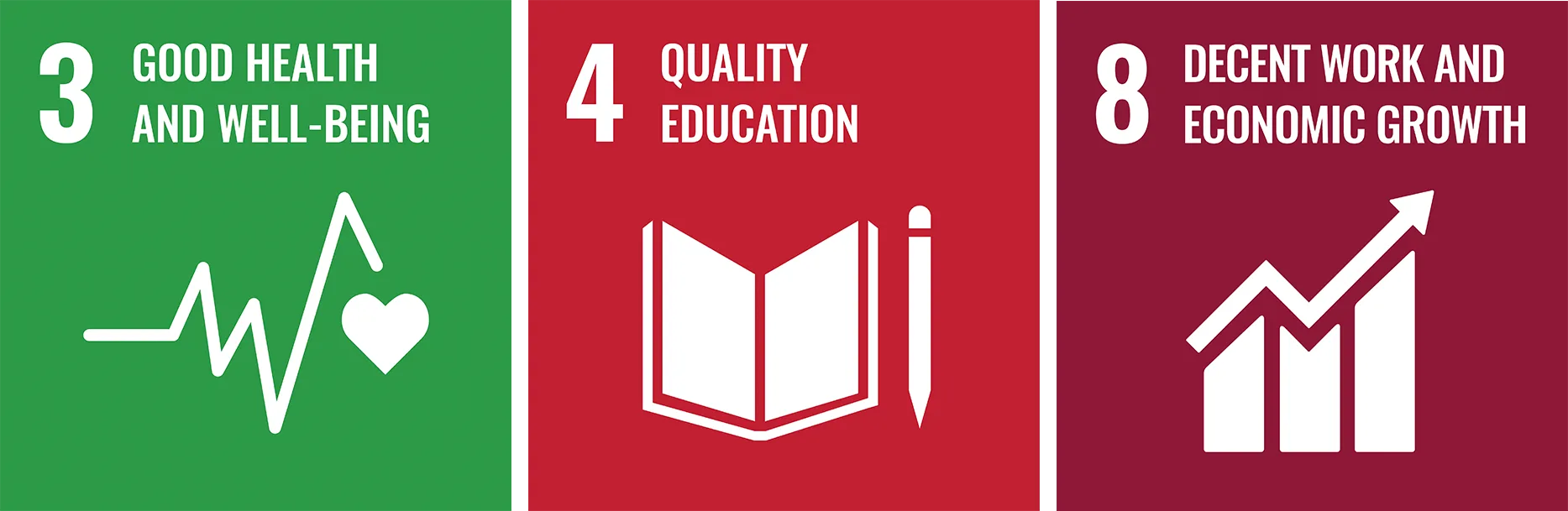
Our Targets for SDG 3, 4 and 8
The further development of Lawo as an attractive employer and the creation of sustainable working conditions play a decisive role in our sustainability strategy. We strive to create a positive working environment that promotes the satisfaction, motivation, and health of our employees.
We are actively committed to promoting equality and equal opportunities in all areas of the company. Continuous investment in training and further education as well as active knowledge transfer form the basis for sustainable growth and ensure the long-term competitiveness of our company.
The successful continuation of our Lawo culture is of particular importance to us. We promote a corporate culture that is characterized by trust, respect, and mutual support. Improving our communication processes and the exchange of information and knowledge is a key measure in this regard. We are thus aligning our company with SDG3, SDG4, and SDG8.
More About Sustainability at Lawo

Environment
Protecting the planet is a core part of Lawo’s commitment to sustainability. We focus on reducing our environmental footprint through energy-efficient operations, climate protection measures, and resource-conscious product design. Learn how Lawo turns environmental principles into action.

Social Responsibility
People are at the foundation of everything we do. We are committed to creating fair, safe, and attractive working conditions that foster trust, diversity, and long-term stability. Through flexible work models, continuous learning opportunities, and a culture of inclusion, we empower our teams to thrive and innovate.
Governance
Strong governance is the foundation of sustainable business at Lawo. We are committed to transparent, ethical leadership and a culture of integrity that respects all stakeholders. By embedding sustainability into our corporate strategy, we ensure long-term value creation and trust.
Contact Us

Questions about our sustainability initiatives or ESG strategy?
Do you have questions about Lawo’s sustainability intitiatives, ESG strategy or something else?
Get in touch with Juliane Struck, Sustainability Manager at Lawo, for more information and send an email to sustainability@lawo.com.
We’d love to hear from you!